Understanding your gut microbiome
The gut microbiome is the community of bacteria and other microbes in your digestive tract. Many help break down food components that you cannot digest yourself. A varied diet with enough fibre supports normal gut function, but research cannot yet turn a commercial stool profile into a reliable personalised health plan.
What lives in the gut?
The gut microbiome is the collection of bacteria, and to a lesser extent fungi, viruses and other microbes, that live in the digestive tract. In scientific use, "microbiota" refers to the organisms and "microbiome" to their genes. In everyday use, people treat the two words as the same.
Most of these microbes live in the colon, which is the large intestine. The stomach and small intestine hold far fewer, because acid and fast movement make them a hard place to settle. The body absorbs most of the sugars, protein and fat before food reaches the colon. The leftovers are mainly fibre and other carbohydrates that human digestive enzymes cannot break down, and the microbes feed on them.
You carry hundreds of species, and no two people have the same mix. Birth and early diet set part of the mix, and what you eat and do for the rest of your life shapes it from then on. It holds steady over months but can shift within days after a sharp change in diet.
What do gut microbes do?
Gut microbes have several recognised roles, although the effect of a particular species or dietary change is often uncertain.
- Fermenting fibre. Bacteria break down the fibre and resistant starch that reach the colon. This releases short-chain fatty acids, mainly acetate, propionate and butyrate. Butyrate is the main fuel for the cells lining the colon. The others enter the bloodstream and influence appetite, blood sugar and fat storage. This is the best-established role and the one with the clearest link to food.
- Keeping the gut wall in order. A well-fed lining is a tighter barrier. The resident microbes also crowd out harmful bacteria by taking up space and food.
- Training the immune system. Much of the body's immune tissue sits along the gut. Early and ongoing contact with a varied microbiome teaches the immune system what to tolerate and what to attack. This is one reason researchers are interested in allergies and autoimmune conditions.
- Making vitamins. Some gut bacteria make vitamin K and certain B vitamins, though how much the body absorbs from this source is still uncertain.
- Signalling to the brain. The gut and the brain talk through nerves, hormones and the immune system, and the microbiome takes part in this conversation. The evidence in humans is early and comes mostly from small studies.
What can change the microbiome?
- Fibre, and the variety of it. Different fibres feed different bacteria. A diet with many plant types, including vegetables, fruit, legumes, whole grains, nuts and seeds, supports a more diverse community than the same amount of fibre from one source. HPB's daily target is about 20 g for women and 26 g for men, and most adults here fall short of it.
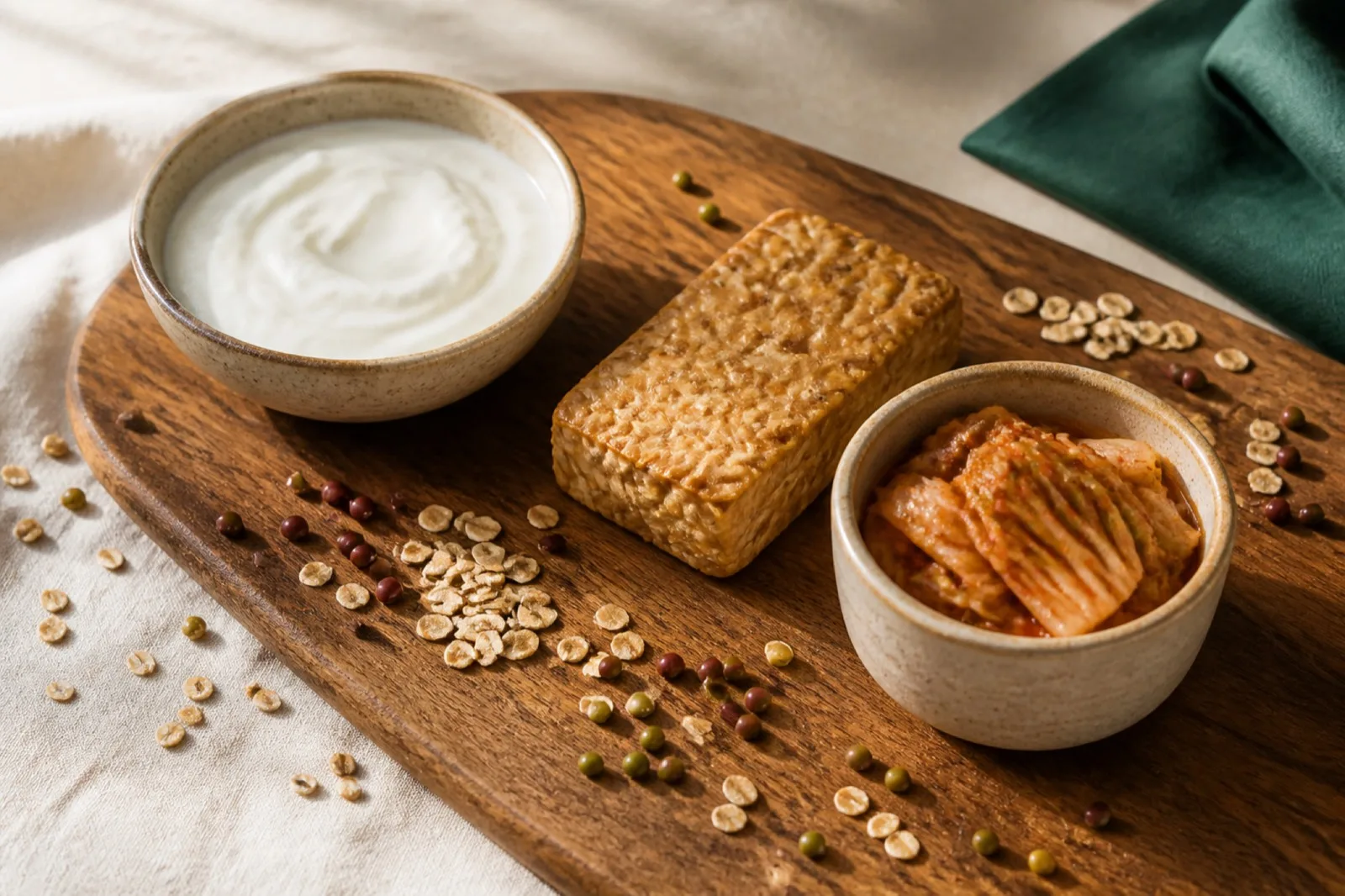
- Fermented foods. Some, such as yoghurt with live cultures, contain living microbes when eaten. Others are heated, pasteurised or cooked, including most tempeh dishes, so may not. A fermented food is not a probiotic by default: a probiotic benefit depends on an identified organism and evidence for a particular use.
- Antibiotics. These can alter gut bacteria, and the degree and duration of change vary by medicine and person. Take them as prescribed when needed. They do not treat viral colds, so do not ask for them for a cold on its own or use leftover antibiotics.
- Sleep and stress. Broken sleep and long stress change the mix, partly through diet and partly through direct effects on the gut. Researchers are still studying the mechanism.
- Age and household. An infant's microbiome starts with few species and builds up through the first years. Older adults tend to have less diverse ones. People who share a home share more of their microbes than strangers do.
- Highly processed foods, sweeteners and alcohol. Researchers are studying how these affect gut microbes. Results vary across foods and substances, so do not treat them as one proven cause of an unhealthy microbiome.
Adding variety with familiar foods
You can get plenty of variety from local food if you plan a little.
Breakfast of oats with fruit, or wholemeal bread with peanut butter, adds two or three plant types before the day starts. A kopi or teh with less sugar keeps the drink from working against the meal.
Lunch at the cai png stall can be brown rice, two vegetable dishes and a bean or tofu dish, which is four plant types on one tray. Tempeh, where the stall has it, is fermented as well.
Dinner can be a soup with a handful of beans or lentils, stir-fried greens, and fruit to finish. Thosai with sambar and a vegetable curry does the same job in a different cuisine.
Snacks can be nuts, fruit with the skin on, or a small pot of plain yoghurt.
Across a week, aim for a wide spread of plant foods rather than a large amount of any one of them. To see how varied your diet is, count the different plants you eat in a week instead of the grams of fibre.
What remains uncertain?
Scientists can describe who lives in the gut in fine detail. They can say far less about what you should do about it.
- There is no agreed definition of a "healthy" microbiome. Diversity is generally a good sign, but a diverse microbiome in one person may look different from a diverse one in another.
- Commercial stool tests can list the bacteria present. They cannot yet reliably say what those results mean for a person's health, or what that person should change.
- Many findings come from mice, and mice are not people. Human trials are smaller and shorter.
- Probiotics, meaning live bacteria taken with the aim of a health effect, are a separate and still-developing topic. A few specific strains have evidence for specific situations. Most general claims run ahead of the evidence. For advice on them, ask a doctor or pharmacist.
- Links between the microbiome and mood, weight, immunity and long-term disease are active areas of research. They do not yet support advice beyond the existing guidance on diet.
Practical habits for gut health
A varied diet with enough fibre supports normal bowel function and provides food for many gut microbes. Fermented foods can add variety if you enjoy and tolerate them, but there is no universal requirement to eat them daily or to achieve a particular microbiome score.
Do not change a medication, stop a treatment, or spend money on a stool test on the strength of a headline. Persistent gut symptoms such as ongoing bloating, a change in bowel habit, blood in the stool or unexplained weight loss are reasons to see a polyclinic doctor, because they can point to things that a change of diet will not fix.
A practical next step
Add different vegetables, fruit, beans and whole grains across the week, and increase fibre a little at a time if needed. Get persistent symptoms checked, and do not assume that changing your gut bacteria will fix every digestive problem.
Sources and further reading
These references explain the guidance and research discussed above. For advice about your own health, speak to a qualified healthcare professional.
Read next
Myopia in Singapore: why outdoor time matters for children
Daylight
Water: how much to drink in Singapore's climate
There is no single number, but there are three reliable signals