How to cut down on salt in hawker meals
The sodium in a hawker meal depends on the recipe, portion and condiments. You cannot count it by looking at the plate. You can ask for less added sauce and leave some broth. These small changes are useful across the day.
Where does sodium come from?
Salt added during cooking is only one source. Health Promotion Board guidance sets a daily limit for sodium and advises people to cut down on salt, sauces and seasonings.
These are the first places to look:
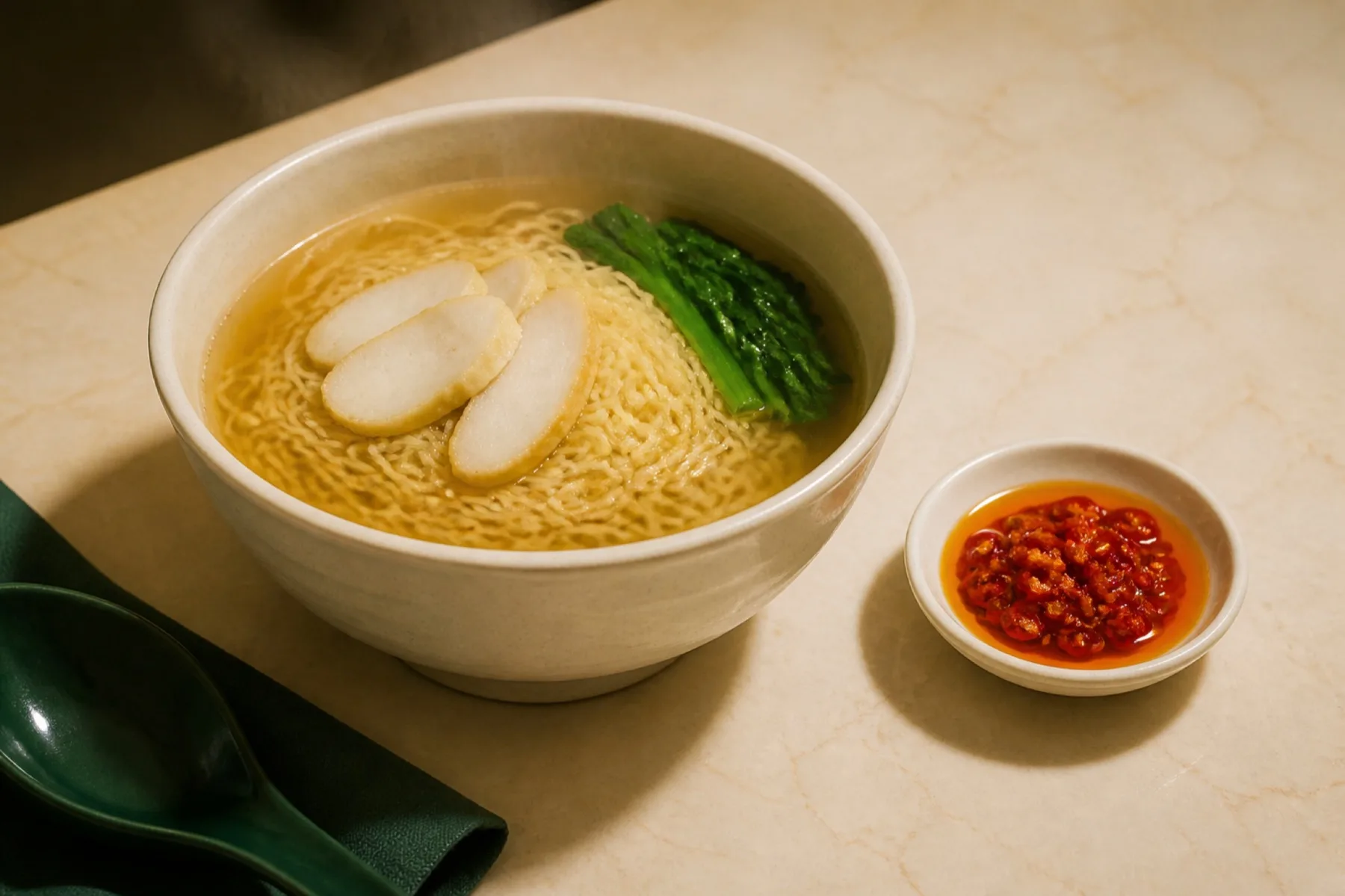
- Soup bases. The stall seasons the broth in fishball noodles, ban mian or yong tau foo before it reaches the bowl.
- Sauces and gravy. The liquid spooned over rice or noodles may carry more seasoning than the plain staple beneath it.
- Preserved vegetables. Pickles and preserved greens bring their own salt to a dish.
- Condiments. Soy sauce, chilli sauce and other dips add to what the stall already used.
The amount depends on the recipe and how much liquid or condiment the stall serves.
What can you ask for at the stall?
You do not need to cook lunch at home to make a different order. Ask before the stallholder plates the food, while they can still adjust the gravy and condiments.
- “Less gravy, please.” This works for cai png, braised dishes and rice plates with sauce ladled over them.
- “Sauce on the side, please.” Use only the amount you want, rather than letting the stall pour it over the whole plate.
- “I’ll skip the soup.” You can still eat the noodles or yong tau foo pieces without finishing the broth.
- “No extra soy sauce or chilli sauce.” Taste the meal before adding anything from the table.
If the stall cooked a dish in sauce, these requests cannot remove what is already in it. They only change what the stall adds when serving.
Can you judge sodium by appearance?
Begin with the liquid. A full bowl of soup, a pool of gravy or a generous sauce coating is visible. That makes it a practical place to adjust an order.
Next, notice preserved toppings and the small dishes beside the plate. A spoonful of chilli or soy sauce may look separate from lunch, but it is still part of what you eat.
Then consider the food itself. The stall may still season a dry-looking dish during cooking, so appearance cannot provide a sodium count. Plain rice is easier to identify than the sauce covering it. Noodles may have seasoning mixed through them.
HPB’s guidance applies across the day. Breakfast, snacks, dinner and condiments all belong in the same daily picture as the hawker lunch.
Are salt substitutes suitable for everyone?
Some products sold as low-sodium salt replace part of the sodium chloride with potassium chloride. That does not make them an automatic swap for every household.
If you take medication, ask your doctor before changing to a potassium-based salt substitute. Bring the medication list and a photo of the substitute’s ingredient panel. The doctor can consider the particular medicines and advise on that specific switch.
At a hawker stall, the ordering requests remain practical: less gravy, sauce separately and no soup. They change what the stall serves without asking the stallholder to reformulate the dish.
Product details: Vplus Formula: ingredients, pack details and directions.
Further reading: HealthHub guidance.
Read next
Omega-3 without fish: what the label reports
Read total oil, EPA and DHA as three separate numbers
What to tell your doctor about your supplements
A clear label makes a short appointment more useful