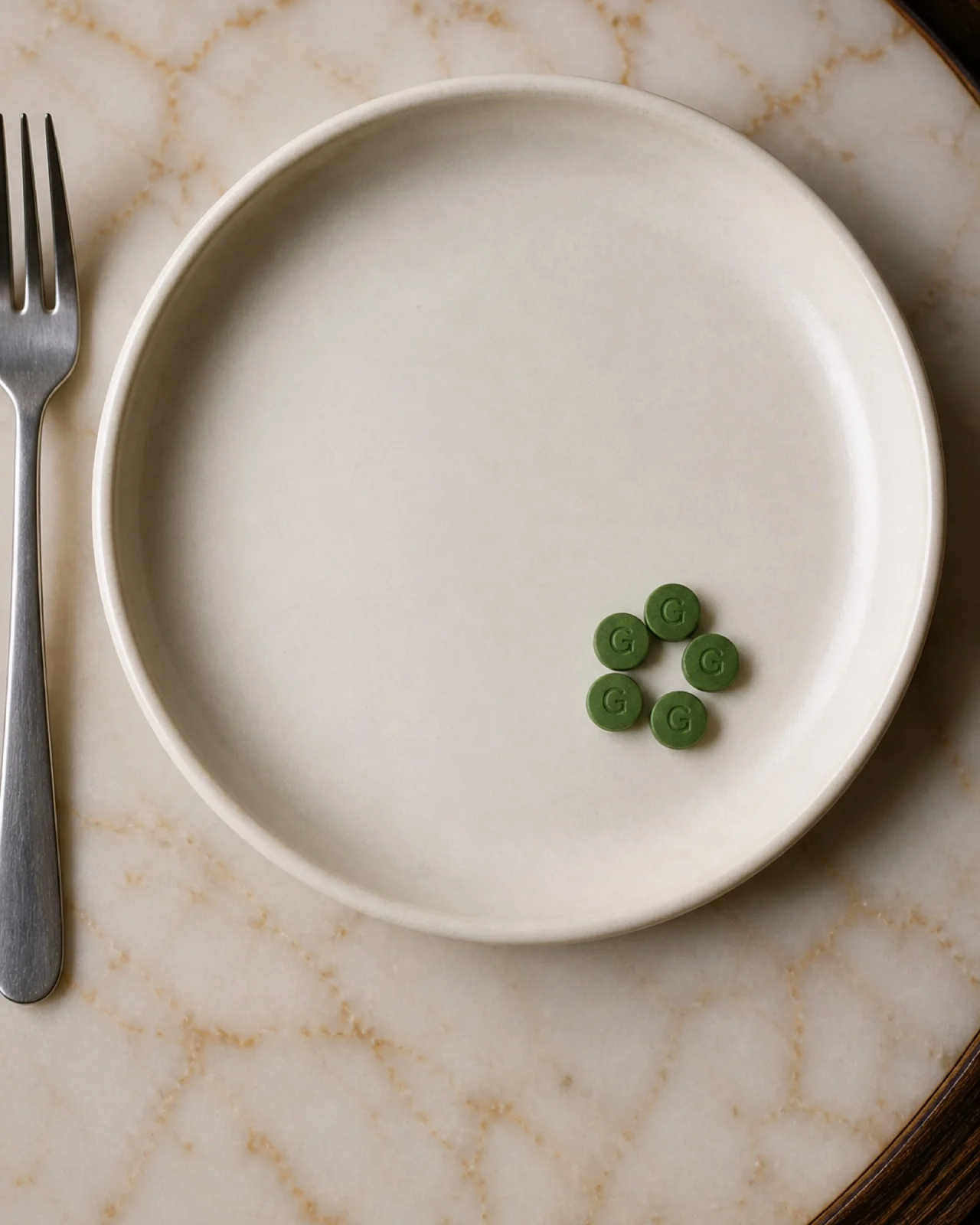
How to assess beauty supplement claims
A box may say that an ingredient has been studied, but that leaves several questions. Who took part, what did they take, and what changed? These checks help you read research claims alongside the everyday details on the label.

What does the wording actually say?
Large type on the front gets attention. The smaller panel gives you more to work with. Sort each statement by what it tells you.
- “Contains” is a content statement. It says an ingredient is present. Look elsewhere on the pack for the amount per serving.
- “Formulated for” describes positioning. It tells you the audience or purpose the maker had in mind. It does not report what happened in a test.
- Research wording points towards evidence. The wording alone does not show the study design, the measurements or the full results.
Look for a named paper, a citation or a QR code leading to the complete study. If none appears, ask the seller for the reference. A general mention of research gives too little detail to assess on its own.
What should you look for in a study?
Suppose a box refers to a study of 40 people over eight weeks. That number and duration describe the study’s boundaries. They do not tell you who took part, what the researchers measured, how many finished or whether there was a comparison group.
The complete paper should let you check:
- Who participated: age range, selection criteria and the number who completed the trial.
- What they took: the exact formula, serving and schedule used in the study.
- The comparison: another product, a placebo or no comparison.
- Who ran it: who funded it, who analysed it and where the full report appeared.
Even a well-run trial covers only the product, people, duration and measurements it studied. It cannot answer questions that the researchers did not test. Check whether the formula on today’s box matches the one in the paper. A similar name or one shared ingredient is not enough to establish that.
Which label details matter?
Front-panel wording is brief by design. The back or side panel carries details you can compare across products without guessing at intent.
- Ingredient list: read it from first to last. Makers list ingredients in descending order, so the first items make up more of the formula than those near the end.
- Serving size: check how many tablets, capsules or scoops make one serving. Then read the amount given for that full serving.
- Batch number: this identifies the production batch if the maker needs to trace the pack.
- Best-before date: check that it is present, legible and suitable for the time needed to finish the pack.
Also compare the study serving with the label serving. If they differ, the pack’s research wording needs another question. A serving direction tells you how the maker intends you to use the product. It is not, by itself, evidence for a claimed result.
How useful are testimonials?
Testimonials tell you what one person chose to report. They do not show what else changed at the same time, how typical the experience was or what would have happened without the product.
A personal account can be sincere. Even so, it cannot replace a complete study or the facts on the label. Treat a testimonial as a prompt for questions. Ask for the ingredient amounts, the study reference and the exact formula tested. If suitability depends on a medicine or medical condition, ask your doctor or pharmacist before deciding.
Product details: Vplus Formula: ingredients, pack details and directions.
Read next
What whole food does, and does not do, for the outside
We are not going to tell you it does
Collagen supplements: what the label says
A calm way to compare sources, servings and daily cost