Understanding blood sugar and HbA1c tests
Fasting glucose measures blood sugar at one point in time. HbA1c reflects average blood sugar over a period of about two to three months. The numbers use different units and are not interchangeable. If a screening result is raised, the clinic may need further testing before making a diagnosis and will explain the appropriate follow-up.
Fasting glucose, HbA1c and the glucose tolerance test
A fasting plasma glucose test measures the sugar in the blood after at least eight hours without food. You can drink water. It shows how the body handles sugar at rest, first thing in the morning, and the unit in Singapore is mmol/L. A fasting plasma glucose result of at least 7.0 mmol/L is in the diabetes range. In someone without clear symptoms, the doctor will usually ask for a confirmatory test. A fasting result of 6.1 to 6.9 mmol/L is impaired fasting glucose, a form of pre-diabetes.
HbA1c answers a different question. Glucose in the blood sticks to haemoglobin, the protein inside red blood cells, and stays attached for the life of the cell. Red cells live for around three months. The percentage of haemoglobin with glucose attached therefore reflects the average blood sugar over the previous two to three months, rather than one morning. International guidance commonly uses HbA1c of at least 6.5% as a diagnostic threshold in suitable circumstances. Singapore screening pathways can use it differently: an HbA1c of 6.1% to 6.9% may prompt fasting glucose or an oral glucose tolerance test. Do not apply an overseas pre-diabetes band to your report without checking the clinic’s interpretation.
HbA1c does not need fasting, which makes it convenient. It can mislead in a few situations, such as anaemia, thalassaemia trait, recent blood loss or kidney disease, because these change how long red cells live. Thalassaemia trait is not rare in Singapore, and a doctor who knows about it may rely on the glucose tests instead.
An oral glucose tolerance test measures the response to a standard glucose drink. For non-pregnant adults, a two-hour value of 7.8 to 11.0 mmol/L indicates impaired glucose tolerance, and at least 11.1 mmol/L is in the diabetes range. Pregnancy uses a separate protocol and different thresholds.
What does pre-diabetes mean?
Pre-diabetes describes blood sugar that is higher than normal and below the diabetes line. Underneath the number, the usual story is insulin resistance. Insulin is the hormone that moves sugar from the blood into muscle and other tissues. As cells become less responsive to it, the pancreas makes more to compensate, and the sugar stays more or less in range. Over years the pancreas struggles to keep up, and the fasting figure and the HbA1c drift upward.
Progression is not inevitable. Some people return to normal glucose levels, and lifestyle changes can reduce the chance of developing type 2 diabetes. Continued follow-up remains important because risk can persist even after a result improves.
In Singapore, MOH declared a War on Diabetes in 2016 because the rate here is among the higher ones for a developed country, and because a sizeable share of people with diabetes did not know they had it. Asian adults also tend to develop diabetes at a lower body weight than Europeans, which is why HPB treats a BMI of 23 and above as the point where risk begins to rise, rather than the 25 used elsewhere.
Changes that can lower diabetes risk
The prevention trials that followed people with pre-diabetes for years point in the same direction. The list covers weight, activity, carbohydrate and sleep.
- Body weight. For people with excess weight, diabetes-prevention trials have used goals such as a sustained 5% to 7% loss together with increased activity. That would be about 4 to 5 kg for a 75 kg adult. Weight loss is not appropriate for everyone; agree a suitable goal with your care team.
- Activity. Muscle takes up glucose when it works, with less need for insulin. The standard target is 150 to 300 minutes of moderate activity a week. A walk of ten or fifteen minutes after a meal lowers the rise that follows it, and strength work on two days a week adds muscle that keeps drawing sugar out of the blood.
- Refined carbohydrate and sugar. Sweetened drinks, bubble tea, kopi with condensed milk, pastries and large portions of white rice and noodles all push blood sugar up fast. Nutri-Grade labels on drinks make the sugar easy to see. Ordering kopi siew dai or kosong is the smallest change with the most repetitions in a week.
- Sleep. Short and irregular sleep worsens insulin resistance. Most people work on food and activity first, and sleep belongs on the list with them.
These changes do not replace a doctor's follow-up, and the doctor will suggest the same ones.
How rice fits into a balanced meal
White rice can raise blood glucose fast, but the response varies with the variety, portion and rest of the meal. Whole grains often provide more fibre. You do not need to cut out rice: focus on a suitable portion and a balanced meal.
The practical answer comes down to how much rice you eat and what you eat with it.
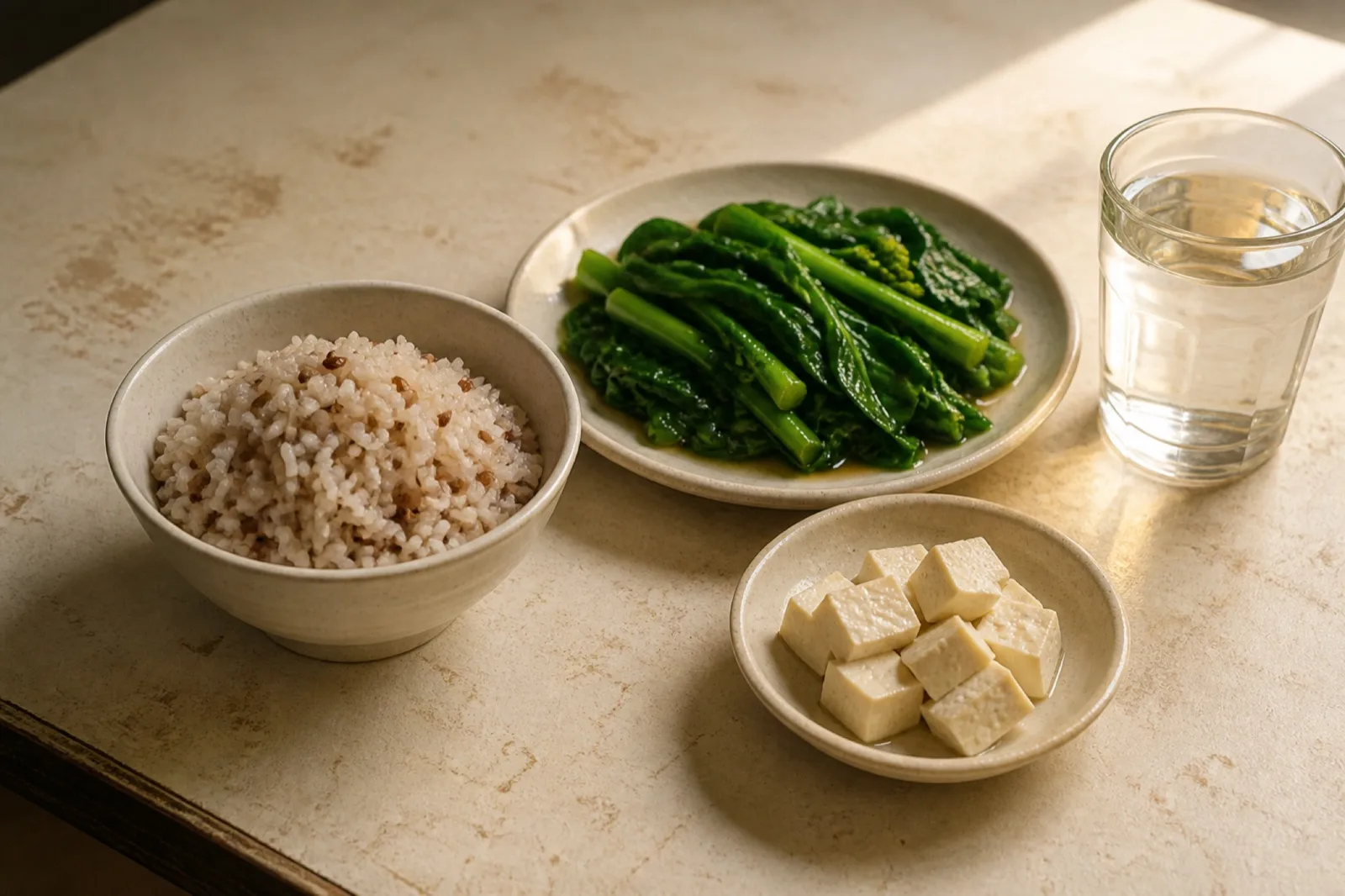
- Make rice a quarter of the plate, as My Healthy Plate suggests, with half the plate vegetables and fruit and a quarter protein.
- Mix in brown rice where the stall or the rice cooker allows. Half and half is a fair start.
- Food order. Eating vegetables and protein before carbohydrate may reduce the immediate glucose rise for some people, but portion size and the overall eating pattern remain more important than following a strict order.
- Watch the combinations. A plate of white rice with gravy and a sweetened drink, and no vegetable, is the pattern that does the most harm.
Bee hoon, kway teow, white bread and prata behave in much the same way, so the same rules apply. Fruit is fine, and juice is a different thing, because the fibre is gone and the sugar arrives at once.
Screening and follow-up in Singapore
Healthier SG Screening includes diabetes screening from age 40 for eligible adults. Adults aged 18 to 39 can use the Diabetes Risk Assessment to check whether earlier screening may be appropriate. Symptoms such as persistent thirst, frequent urination or unexplained weight loss need a clinical assessment regardless of age.
Pre-diabetes usually needs at least annual reassessment, with timing adjusted to your results and risk. Your clinic can arrange support for food choices, activity and weight management. Ask for a clear date for repeat testing rather than waiting for symptoms.
A diabetes result leads to a fuller plan. The clinic repeats HbA1c every three to six months. It checks the eyes, feet and kidneys on a schedule, because those are the tissues that high sugar damages over time. The doctor will usually start medicine, and it works alongside the food and activity changes rather than in place of them. Anyone on diabetes medicine should keep taking it while making those changes, and let the doctor adjust the dose on the strength of the next HbA1c.
What to ask when you receive a result
Keep the test name and unit with the number: 6.3 mmol/L fasting glucose and 6.3% HbA1c are different measurements. Ask whether the result is a screening finding or a confirmed diagnosis, what action is needed and when to repeat testing.
A pre-diabetes result is a reason to take action with your care team. A balanced diet, regular activity and appropriate weight management can reduce risk. A diabetes diagnosis needs an individual treatment and monitoring plan, not only less white rice.
A practical next step
Record the test name, result, unit and date. Ask the clinic whether you need a confirmatory test and when to return. Food, activity and weight management can help reduce risk, alongside any prescribed treatment.
Sources and further reading
These references explain the guidance and research discussed above. For advice about your own health, speak to a qualified healthcare professional.
Read next
Cholesterol: how to read a lipid panel
Four figures on one sheet, and what each of them is telling you
Vitamin D in a sunny country: why so many Singaporeans still run low
The sun is there every day, and most of us are not standing in it