Where can you get calcium without dairy?
Dairy-free diets can include calcium from fortified soy drinks, calcium-set tofu and some green vegetables. Fish eaten with their bones are another option if you eat fish. Amounts vary, so check the product label and the portion you use.
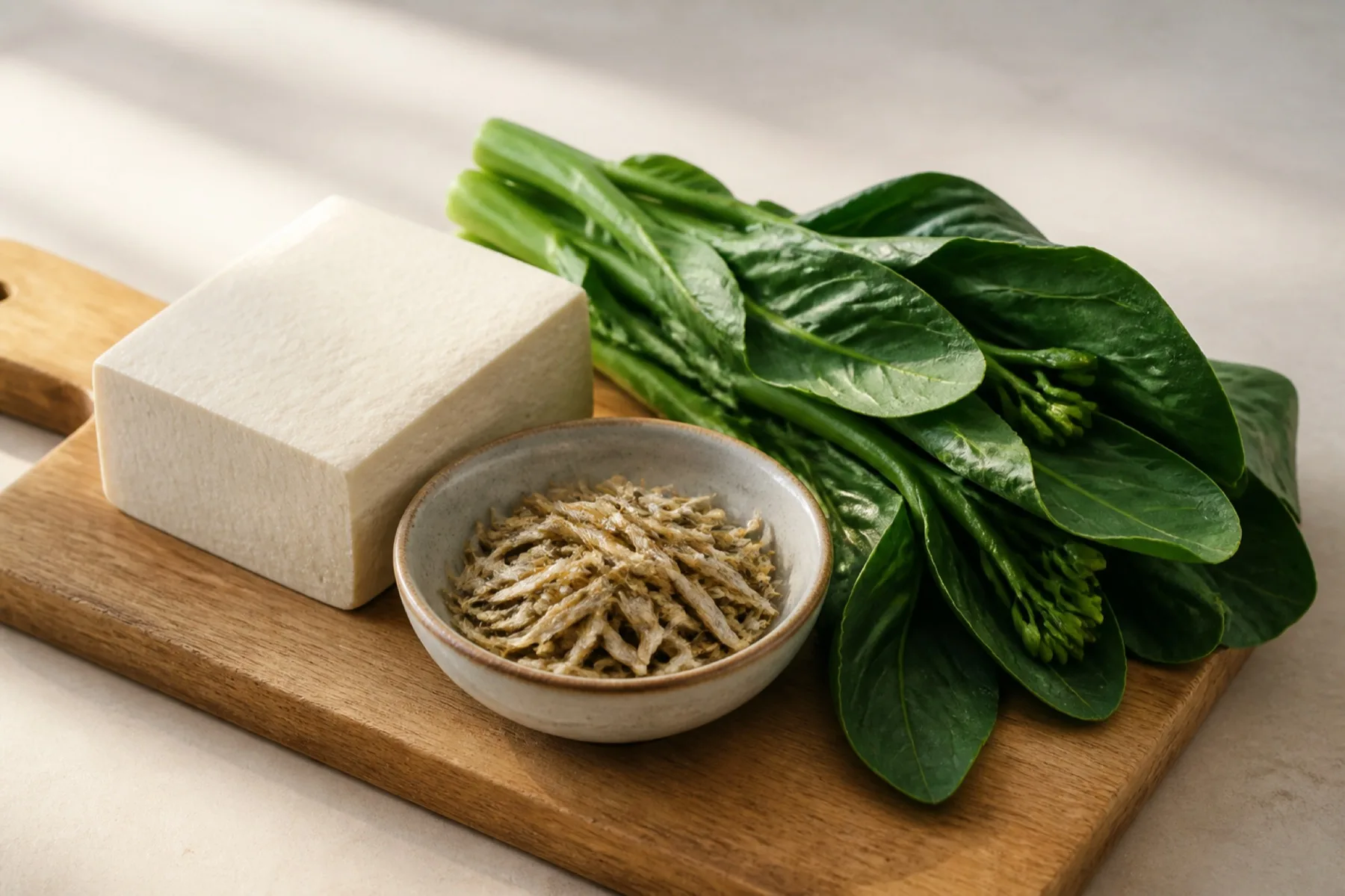
Which foods contain calcium?
A dairy-free calcium list uses everyday ingredients. Several options appear in wet markets, supermarkets and hawker meals. Notice which ones turn up across your day.
- Calcium-set tofu: Check the ingredient list for the coagulant. You cannot tell the coagulant from the block alone.
- Dark leafy greens: Kai lan, chye sim, spinach and broccoli are on HPB's list of non-dairy foods.
- Ikan bilis and sesame: You eat ikan bilis with its small bones. Sesame may appear as seeds, paste or a topping.
- Fortified soy milk: Look for calcium in the nutrition information. The word "soy" by itself does not give an amount.
You can spread these foods across the day. Tofu at lunch, greens with dinner and fortified soy milk at breakfast can each contribute to the day's total. How much depends on the portion and the figure on the packet.
What should you check on tofu?
Tofu is soy milk set with a coagulant. That setting ingredient is the most useful thing to check on a tofu label. Look in the ingredient list for a calcium salt, which most packets write as calcium sulphate. A packet may also use another coagulant, so do not assume every block has the same calcium content.
Words such as "firm", "silken" and "traditional" describe style or texture. They do not replace the ingredient list. If the packet provides a nutrition panel, read the calcium amount as well. Check whether that figure covers 100 grams, one serving or the whole pack.
At the supermarket, compare like with like. Two similar-looking blocks can have different coagulants and serving sizes. Read the packet before you choose a block.
How much calcium is recommended?
HPB's Recommended Dietary Allowances give a daily calcium guide of 800 mg for adults aged 19 to 50. The guide is 1,000 mg from age 51. These are totals for the day, across food and drink, rather than a target for one plate.
The same reading habit applies to fortified soy milk. Find the calcium line, then note the stated serving size. Read a figure per 100 ml against the amount you pour. The front of the carton may say "fortified" or "high calcium", but the nutrition panel gives the number to compare.
At a hawker meal, consider whether the dish includes a calcium-containing food such as tofu or greens. The recipe, tofu coagulant and portion still affect how much it supplies.
How do you put these sources together?
We can point to food sources and the HPB guide. We cannot calculate a household's daily total from a message. The brand, coagulant, portion and fortification line can all change the arithmetic.
For a restricted diet, a dietitian can review several days of meals and the packets you use. Bring photos of the ingredient lists and nutrition panels. The dietitian then works from packet figures instead of guesses.
Product details: Vplus Formula: ingredients, pack details and directions.
Further reading: HealthHub guidance, NIH guide to Calcium.
Read next
Protein after 60
Why it matters more, not less
Vitamin K on a label, and the blood-thinner conversation
Green vegetables, chlorella and one clear question for the clinic