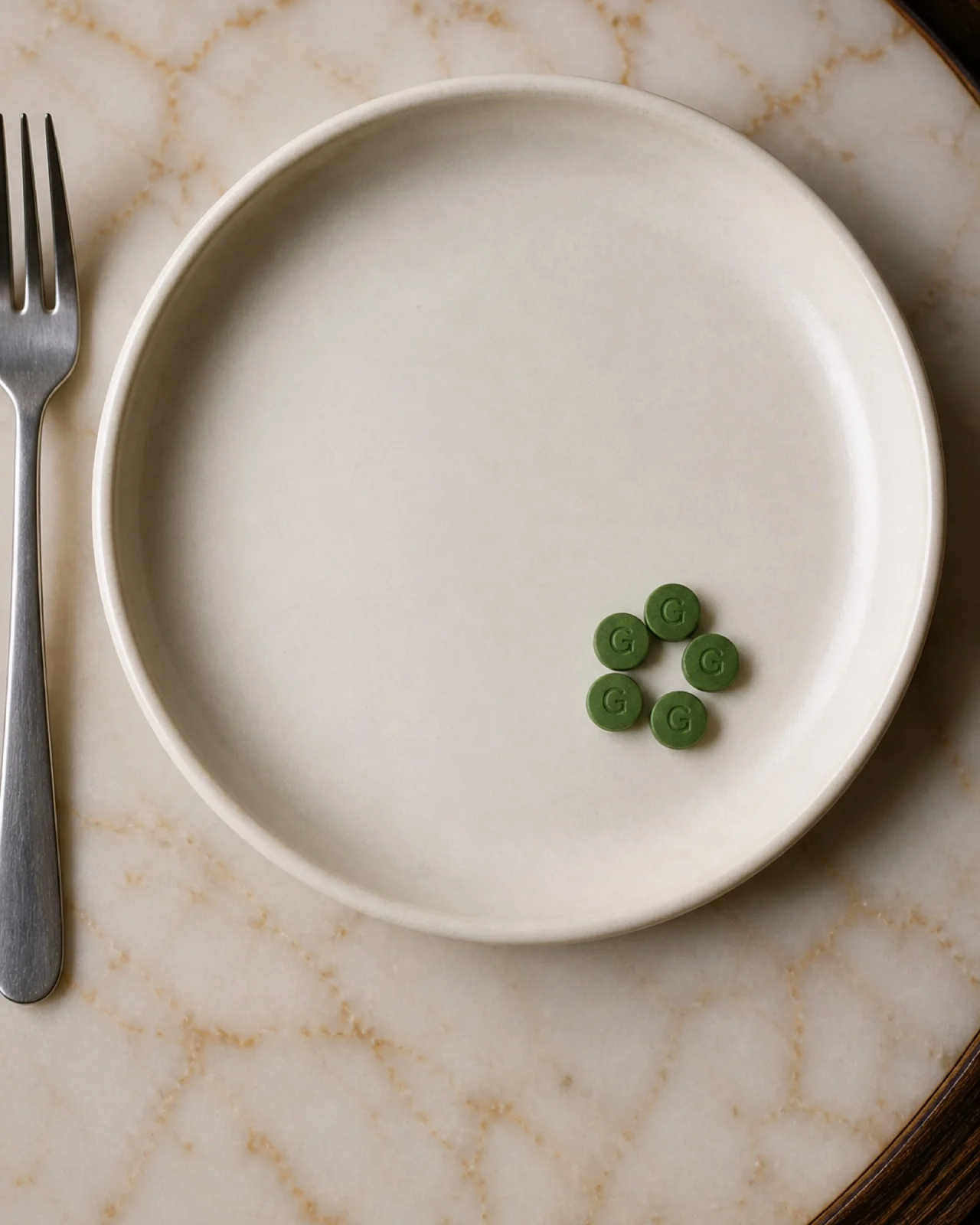
Where can vegetarians get omega-3?
Omega-3 is a group of fats, not a single ingredient. Flaxseed, chia and walnuts contain ALA. Certain microalgae provide DHA, and some algal oils also provide EPA. Knowing which one a food or supplement contains makes comparison easier.
How are ALA and DHA different?
The words “omega-3” can make several fats sound like one ingredient. For a vegetarian shopping basket, two names are worth knowing.
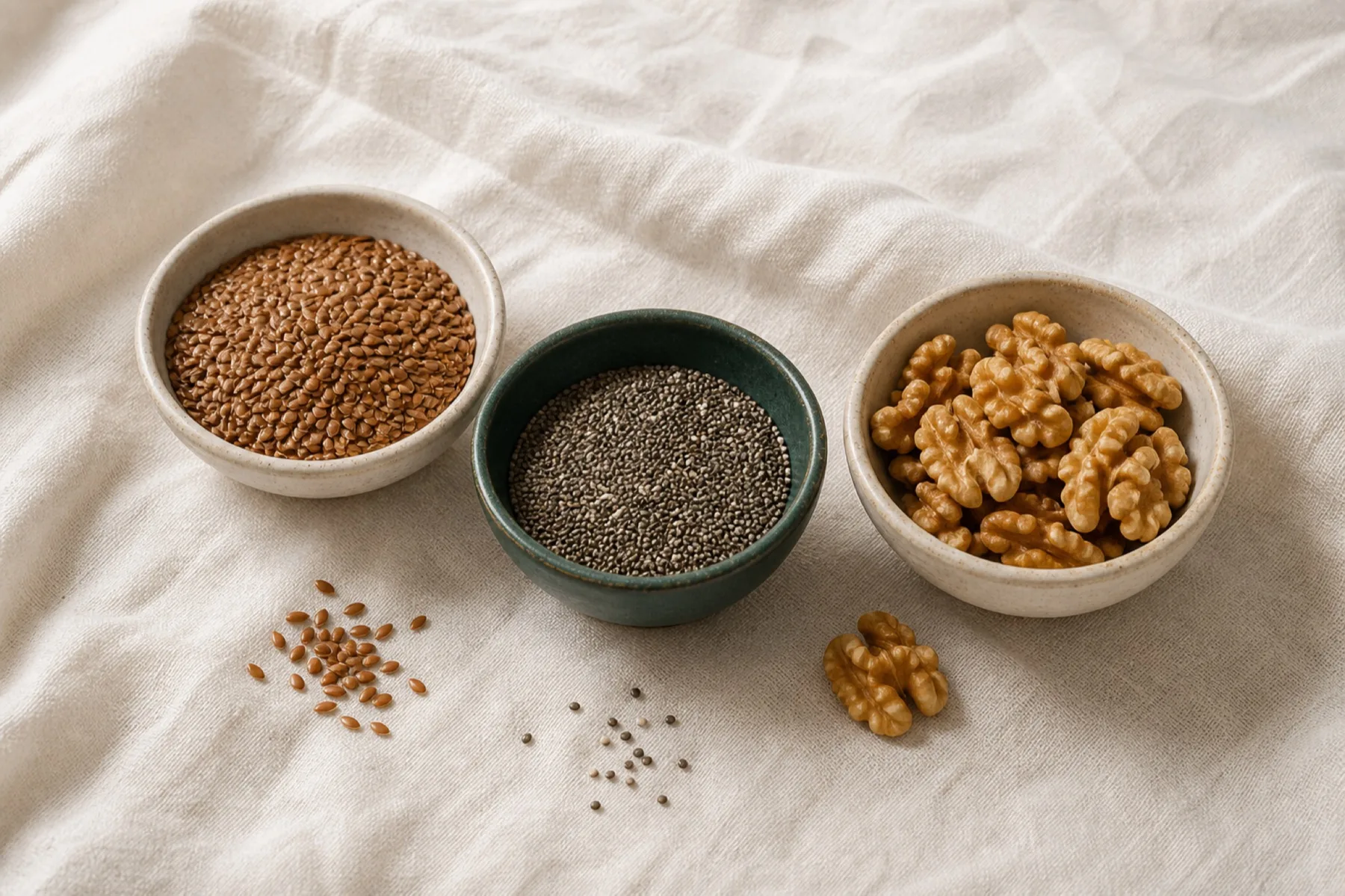
- ALA means alpha-linolenic acid. Flaxseed, chia seeds and walnuts contain it.
- DHA means docosahexaenoic acid. It is a different molecule from ALA.
- Conversion means changing one molecule into another. The conversion of ALA to DHA is limited.
- Microalgae provide a non-fish source of DHA.
Keep that distinction in mind when you read a packet. A product that lists ALA has told you something different from one that lists DHA. The broad phrase “omega-3” does not settle the question on its own.
Which vegetarian foods contain omega-3?
Flaxseed, chia seeds and walnuts put ALA on a vegetarian plate. They can sit beside foods already in the kitchen, without turning every meal into a special recipe.
Stir ground flaxseed into oats or yoghurt. Add chia to overnight oats or a drink you make at home. Walnuts work as a snack or as a topping for salad. These foods contain ALA; they are not direct sources of DHA.
DHA outside fish comes from microalgae. On a label, look for the specific molecule rather than assuming that every seed, nut or algae ingredient provides the same omega-3 fat. If the front of the pack says only “omega-3”, turn it over. The ingredient list and nutrition panel should tell the fuller story.
How can these foods fit into meals?
Start with meals your household already eats and rotate the ALA foods across them.
- At breakfast: add ground flaxseed to oats on one morning and chia to overnight oats on another.
- At lunch: scatter walnuts over a home-prepared salad, or keep a small portion beside the meal.
- At snack time: choose walnuts on a day when they suit the household menu.
- At the supermarket: compare labels and note whether the omega-3 named is ALA or DHA.
At a kopitiam or hawker centre, the choice may be less obvious. There may be no flax, chia or walnut option on the stall menu. Add them at home instead of forcing them onto every plate outside.
The aim here is label clarity and variety across the week. It is not a calculation that turns one food into another.
When does the type of omega-3 matter?
Flaxseed, chia and walnuts are not a direct replacement for DHA. They contain ALA. DHA is a separate molecule, and conversion from ALA is limited.
Those foods still have a place, even though they contain a different omega-3. They are ordinary vegetarian foods with their own stated nutrient content. Keep the two columns clear: seeds and walnuts for ALA; microalgae as a non-fish source of DHA.
If a doctor or dietitian has asked you to obtain a particular type or amount of omega-3, bring the label to them. Ask whether it lists the molecule they meant. This article cannot choose an amount for an individual diet or replace that advice.
Product details: Vplus Formula: ingredients, pack details and directions.
Further reading: NIH guide to Omega3 fatty acids.
Read next
Algal DHA and fish oil: reading the two labels
Start with the declared milligrams
Indigold® and algal DHA
Omega-3 without the fish