What is psyllium husk?
Psyllium husk comes from the outer covering of Plantago ovata seeds. It absorbs water and thickens in liquid, so preparation directions matter. Check these points before using a product that contains it.
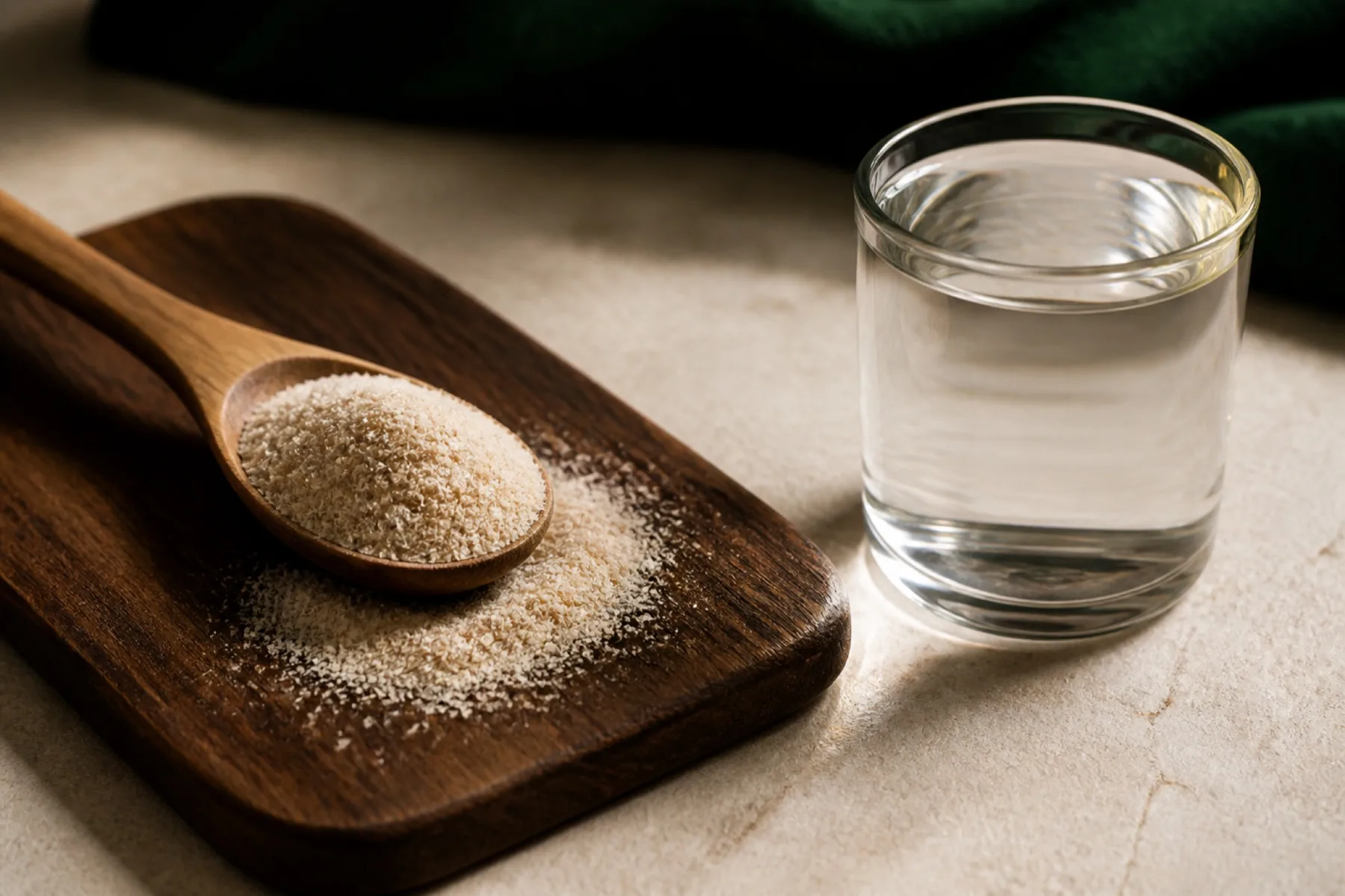
Where does psyllium come from?
The husk is the outer covering of the Plantago ovata seed. Once separated and milled, it looks like pale flakes or a fine, light powder. People have used it as a food ingredient for a long time.
A product panel may list it as “psyllium husk”. A label may also specify psyllium husk powder. Both descriptions tell you which part of the seed the maker uses. The order of ingredients still matters: most labels list ingredients from the largest amount to the smallest.
Three details are worth checking:
- The ingredient name as printed, including whether the label says husk or husk powder.
- Its position in the full ingredient list.
- The stated amount per serving, if the pack gives one.
“Mostly soluble fibre” describes the type of fibre in psyllium. It is an ingredient description and says nothing about results.
Why does it need water?
Psyllium takes up water. Stir it into water and the texture starts to thicken. So product directions pair it with a full glass and tell you to drink it straight away.
The amount of water is part of the preparation instruction. Do not treat it as optional or swap it for a small sip. Follow the directions on the pack you use, because serving sizes and mixing instructions can differ between products.
A typical label sets out the steps in this order:
- Measure or open one stated serving.
- Stir it into the stated amount of water.
- Drink it as directed on that particular pack.
- Read the full label before changing the serving.
Anyone told to limit fluids should discuss the product with a doctor before use. The same applies to anyone with difficulty swallowing. Shop staff cannot make that decision for them.
How much fibre is in a serving?
“Per serving” only makes sense beside the pack’s own serving definition. One brand may define a serving as a sachet. Another may use a scoop or a number of teaspoons. If you compare the front of two packs without checking that definition, you may get a false like-for-like comparison.
Read these parts together:
- Serving size: the amount the manufacturer uses for the panel.
- Servings per pack: how many stated portions the container holds.
- Fibre per serving: the amount linked to that stated serving.
- Directions: how to mix the serving and how much water to use.
The ingredient list answers what is inside. The nutrition panel answers how much of a listed nutrient is in the stated serving. The directions explain how the maker intends you to prepare the product. Each part has a different job.
How do you compare psyllium products?
Compare the full formula, fibre per serving and preparation directions. A product containing psyllium plus other ingredients may have a different fibre amount from plain psyllium husk.
For Fibre Plus, use the current pack to confirm the ingredients and mixing directions. If you take medicines, ask a pharmacist whether you need to take the fibre product at a different time.
Product details: Vplus Formula: ingredients, pack details and directions.
Further reading: Published research.
Read next
The fibre swaps that actually stick
Six familiar choices, with no new recipes and no Sunday overhaul
The fibre gap
What a 10 g sachet does about it