
Starting strength training after 40
Strength training helps maintain the muscle you use for stairs, carrying groceries and getting up from a chair. You can start after 40 even if you have never used a gym. Bodyweight exercises, bands and weights all work when the resistance is suitable and increases a little at a time. The general target is at least two days a week.
How muscle changes with age
Muscle mass and strength tend to decline with age, and more so with inactivity or illness. Sarcopenia is a clinical condition involving low muscle strength and reduced muscle quantity or quality. The name does not cover every normal age-related change.
Power, the ability to produce force at speed, can decline with age and matters for stairs and balance recovery. Walking supports health and mobility, while progressive resistance exercises provide a more direct stimulus for increasing strength.
Two things speed the decline. One is inactivity, including long stretches of sitting at a desk. The other is eating too little protein, which is common in older adults who lose their appetite or shift towards porridge and soft foods.
Muscle responds to training at every age. Studies of people in their seventies and eighties show measurable gains in strength within a few months of regular resistance work. Starting later still produces results, though the earlier the habit begins, the more muscle there is to keep.
Benefits for bones and daily tasks
Resistance exercises can support bone strength as well as muscle. Weight-bearing activity, balance exercises, adequate nutrition and appropriate treatment all have a role in bone health. The most suitable exercises depend on factors such as osteoporosis, previous fractures and joint problems.
Balance depends on the same muscles. Standing up from a low chair, stepping onto a bus, or recovering when a foot catches on a kerb all rely on the legs and hips producing force at speed. As that ability fades, falls become more likely, and a fall in later life often leads to a long recovery and a loss of confidence that is hard to win back.
Three practical benefits follow from keeping muscle:
- Everyday tasks stay easy. Carrying groceries up from the car park or lifting a grandchild does not become a strain.
- Glucose control. Working muscles take up glucose, and regular resistance exercise can improve insulin sensitivity. The benefit depends on training and overall health, and the amount of muscle is one part of that.
- Recovery from illness is faster. People with more muscle tend to bounce back better from a hospital stay or a long bout of flu.
What counts as strength training?
Strength training, or resistance training, means working a muscle against a load until it is tired. The load can be almost anything.
- Bodyweight. Squats to a chair, wall push-ups, step-ups onto the bottom stair of an HDB block, and lunges along the corridor all count. They cost nothing and need no equipment.
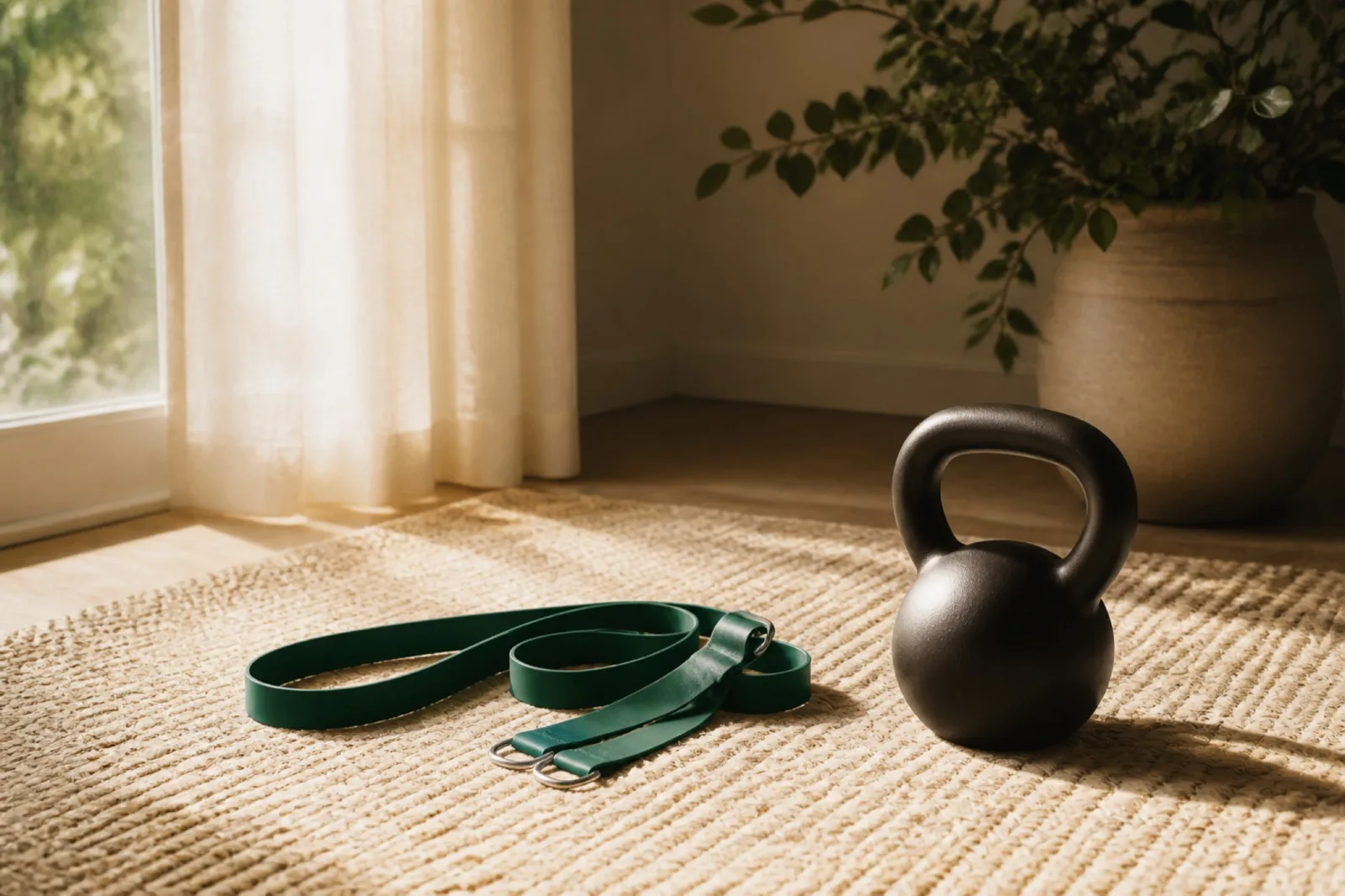
- Resistance bands. A set of bands fits in a drawer and gives the arms, back and shoulders something to pull against. They suit a small flat well.
- Household loads. Controlled exercises using manageable household weights can provide resistance. Avoid treating awkward, heavy grocery bags on stairs as a workout if they compromise your balance or grip.
- The gym. ActiveSG gyms across the island have the machines and free weights that make it easy to add load bit by bit. Machines are a good place to start because they guide the movement.
- Classes. Tai chi and yoga build balance and some strength, and a resistance class at a community centre adds more. The People's Association and ActiveSG run many of them.
A session does not need to be long. Eight to ten exercises covering the legs, hips, back, chest, shoulders and arms, each done for one to three sets of eight to twelve repetitions, is the standard shape. The last two or three repetitions of each set should feel hard.
How often should you train?
Adults should include muscle-strengthening activities on at least two days a week, alongside aerobic activity. Ordinary walking or swimming does not always provide enough resistance to strengthen all major muscle groups, so include exercises that target them.
For adults over 65, the WHO adds that weekly activity should include balance and strength work on three or more days, because of the link to falls.
Two days a week, with a rest day between, is enough to see progress in the first few months. The days do not need to be the same length or the same exercises. One session at the gym on Saturday and twenty minutes of bodyweight work on Wednesday evening would meet the guideline.
Progress comes from asking a little more over time. That can mean one more repetition, a dumbbell one step heavier, or a lower chair to stand up from. Your muscles adapt to the load you give them, and they stop adapting when the load stays the same.
Starting and progressing safely
Most healthy adults can begin light-to-moderate activity and build up from there. Seek advice first if symptoms or conditions such as heart disease, uncontrolled blood pressure, recent surgery or significant joint problems may affect exercise. You do not need a health screening before every gentle exercise session.
Follow a few principles to keep the early weeks free of trouble:
- Learn the movement before adding load. A slow, controlled squat to a chair is more useful than a heavier one done with poor form.
- Leave a day between sessions for the same muscle group. Muscle rebuilds during the rest days.
- Expect some soreness, but not pain. A dull ache the next day is normal. A sharp pain during an exercise means stop.
- Breathe out on the effort. Holding the breath while pushing causes a sharp rise in blood pressure, which matters more after 40.
- Ask for a short induction. ActiveSG gyms offer one, and a single session with an instructor teaches you technique you will use for years.
Food matters alongside the training. Muscle needs protein spread through the day, which is easy to manage with eggs, fish, tofu, beans, dhal and lean meat at each meal. If you are unsure about your intake, read our article on protein after 60.
Building a routine you can maintain
Regular resistance exercise can maintain or improve strength and everyday function as you age. Begin at a manageable level, practise good technique and increase the challenge in small steps. You can use basic equipment at home or train at a gym, depending on what suits you.
Begin with the easiest version you can repeat for a month, and add load or a gym visit once it feels routine. If you have a heart, blood pressure or joint condition, speak to your doctor or polyclinic before starting, and follow that advice over anything written here.
A practical next step
Begin with controlled movements and a manageable load. Train the major muscle groups on at least two days a week, allowing recovery between sessions. Get advice if a medical condition or persistent pain affects what you can do.
Sources and further reading
These references explain the guidance and research discussed above. For advice about your own health, speak to a qualified healthcare professional.
Read next
Sleep: how much adults need, and what gets in the way
Seven to nine hours is the target
Sitting all day: what long sitting does, and how to break it up
Sedentary time is its own habit