What do blood pressure numbers mean?
A blood pressure reading has two numbers, such as 138/88 mmHg. Both matter, and in most cases a doctor bases a diagnosis on repeated measurements taken the right way. Clinic and home readings also have different thresholds. If you understand the figures and how to measure them, you will find it easier to discuss your results with your doctor.
What the two numbers measure
Blood pressure is the force of blood against the walls of the arteries. It comes as two numbers, such as 120/80, and you read it aloud as "120 over 80". The unit is millimetres of mercury, written mmHg, which is a leftover from the old column instruments.
The first number is the systolic pressure. It is the pressure at the moment the heart contracts and pushes blood out. The second is the diastolic pressure. It is the pressure between beats, while the heart refills.
Both figures matter, and they do not always move together.
- Systolic measures the peak. It is the number that most often drifts upward after the age of 50, because arteries stiffen with age.
- Diastolic measures the trough. A raised diastolic figure is more common in younger adults.
- Pulse pressure is the gap between the two. A widening gap is one sign of stiffer arteries, and doctors note it in older patients.
A reading of 152/78 is still high, even though the lower number looks fine. Doctors act on whichever figure is over the line.
A reading is also not a fixed property, like height. Pressure moves with the time of day, the last meal, a rushed walk, a full bladder and a tense conversation. So doctors apply the categories below to a pattern of readings, taken at rest, and never to a single number.
Clinic and home blood pressure thresholds
Singapore's clinical guidelines use categories that are similar to those used in most of the world.
- An optimal clinic reading is below 120/80 mmHg. Most classifications put clinic readings of 120–129 systolic and/or 80–84 diastolic in the normal band, and 130–139 and/or 85–89 in high-normal. Either number can place a reading in a higher category.
- High-normal readings are a reason to review risk factors and arrange repeat checks. Your clinician may use readings outside the clinic to check for white-coat or masked hypertension.
- As a rule, doctors diagnose hypertension from persistent clinic readings of at least 140/90 mmHg. The corresponding home average threshold is lower, at 135/85 mmHg. Your doctor considers the measurement method and repeated results, not one reading on its own.
- A reading of 180 systolic or 120 diastolic or higher needs prompt attention. If you also have chest pain, breathlessness, weakness, confusion or a change in vision, call 995. Without symptoms, rest and repeat the reading after a minute; if it remains this high, obtain urgent same-day medical advice.
First, doctors place a person in the higher category if either number qualifies. A reading of 128/94 is in the hypertension range because of the 94. Second, the target is lower for some people. A doctor may set a tighter goal for someone with diabetes or kidney disease, and the guidelines allow some leeway for the oldest and frailest patients.
High blood pressure often has no symptoms, so regular measurement matters. Healthier SG Screening offers cardiovascular risk screening from age 40, with earlier testing for some higher-risk adults. Ask a clinic about eligibility and follow-up.
How to measure blood pressure at home
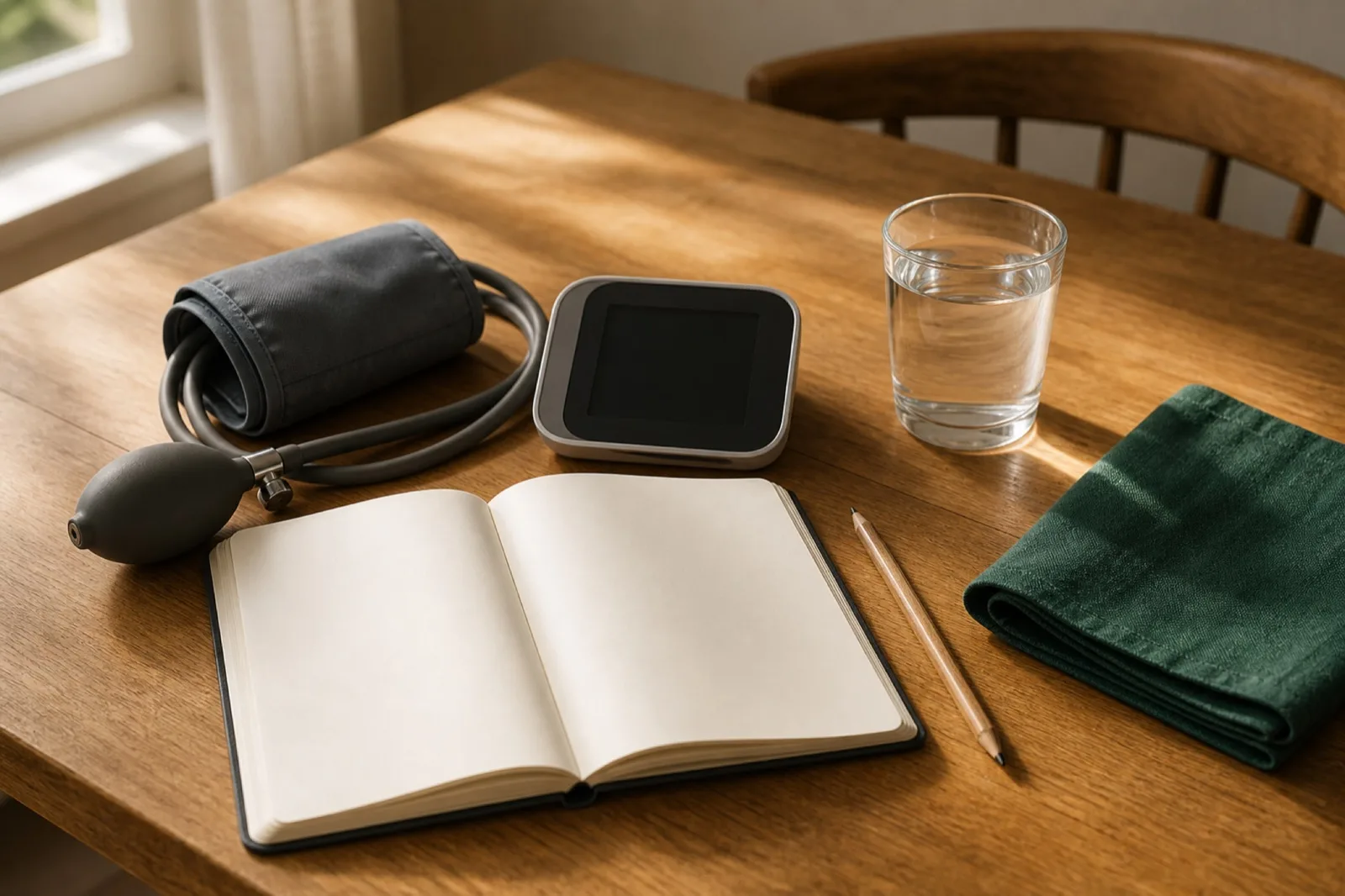
Home readings are useful because they remove the clinic effect, where nerves push the number up. They are only useful if you take them the same way each time. The routine below is the one polyclinic nurses teach.
- Use an upper-arm cuff that fits, from a validated model. Wrist monitors are more sensitive to arm position and are harder to get right.
- Sit and rest for five minutes first. Keep the back supported, feet flat on the floor, legs uncrossed, and stay quiet.
- Rest the arm on a table at heart level, with the cuff on bare skin rather than over a sleeve.
- Skip kopi, cigarettes and exercise for 30 minutes beforehand, and empty the bladder.
- Take two readings a minute apart, and write both down or let the machine store them.
Your clinician may ask for morning and evening measurements over about seven days. Follow their timing instructions, including how to coordinate readings with medicines; do not delay or skip a dose to obtain a reading. Bring all the values you record so the clinic can calculate the appropriate average.
The free machines outside pharmacies and in some community spaces are a reasonable prompt. They are a poor basis for a diagnosis, because the seat, the arm height and the rush all vary. If you get a high reading on one, repeat it at home with the routine above, or at a clinic.
Habits that support blood pressure control
The daily habits that raise or lower blood pressure are well established. Each has a modest effect on its own, and together they can shift a reading by a margin that matters.
- Salt. HPB's guidance is under 5 g of salt a day, about one teaspoon, and most of it arrives in food rather than from the shaker. Gravy, soup stock, soy sauce, pickles, instant noodles and processed meat carry the bulk. Asking for less gravy and leaving some of the soup are the two easiest cuts at a hawker centre.
- Body weight. Extra weight raises pressure, and losing a modest amount lowers it. The effect builds over months rather than days.
- Activity. The standard target of 150 to 300 minutes of moderate activity a week, such as brisk walking on a park connector, lowers resting pressure over weeks.
- Alcohol. Regular drinking raises pressure, and cutting back brings it down.
- Sleep and stress. Short, broken sleep and prolonged stress both push readings up. Changing either takes time, and both belong on the list.
Potassium, found in vegetables, fruit, beans and potatoes, works against sodium and helps. People with kidney disease should ask a doctor before adding potassium-rich foods on purpose.
Medication and these habits work together. If you take blood-pressure tablets, keep taking them while you work on salt and weight, and let your doctor adjust the dose based on the readings.
When to arrange a review
A repeated high reading needs follow-up. Arrange a review for a home average of 135/85 mmHg or above, or according to the threshold your doctor has set. The highest readings or concerning symptoms require the urgent action described above, rather than a week of routine monitoring.
If you are due for routine cardiovascular risk screening, check Healthier SG Screening eligibility with a participating CHAS GP clinic. If you already take blood-pressure medicine, a good week of readings does not mean you should stop it; discuss any dose change with your doctor.
Do not stop your medication on the strength of a good week of readings. In most cases, good readings are the medicine doing its job. Take the numbers to the doctor and let them decide.
A practical next step
Bring your doctor a record of readings taken with the home routine above. A home average of 135/85 mmHg or higher warrants review. The highest readings need prompt action, above all when symptoms come with them.
Sources and further reading
These references explain the guidance and research discussed above. For advice about your own health, speak to a qualified healthcare professional.
Read next
Health screening in Singapore: what to check, and when
Screen for Life ages
Cholesterol: how to read a lipid panel
Four figures on one sheet, and what each of them is telling you