What is the difference between chlorella and spirulina?
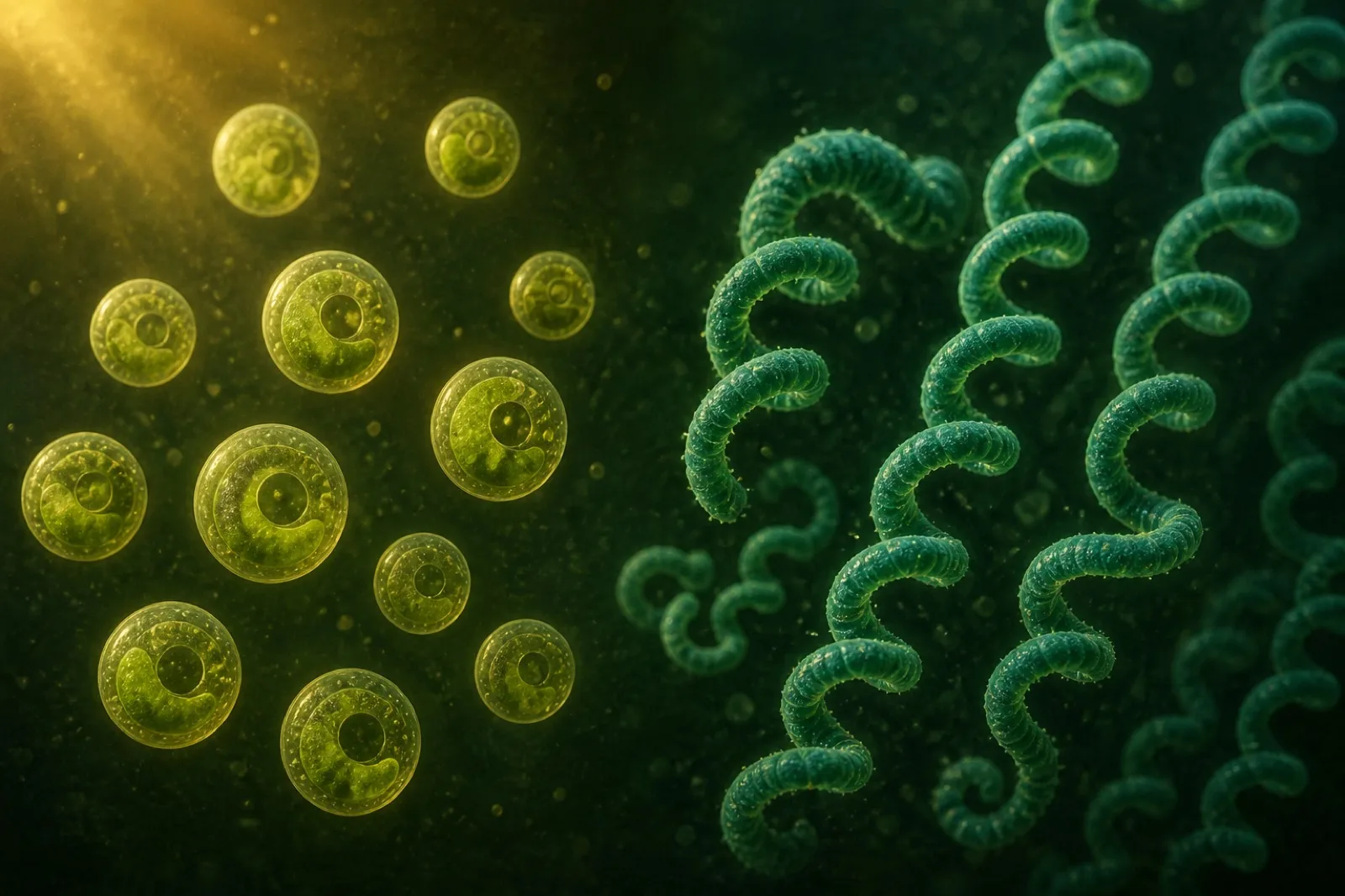
Chlorella and spirulina are different organisms, although both appear on labels as algae ingredients. Chlorella is a green microalga with a nucleus. Spirulina is a cyanobacterium that forms filaments. Those differences tell you a few things about the ingredients.
Are they the same kind of organism?
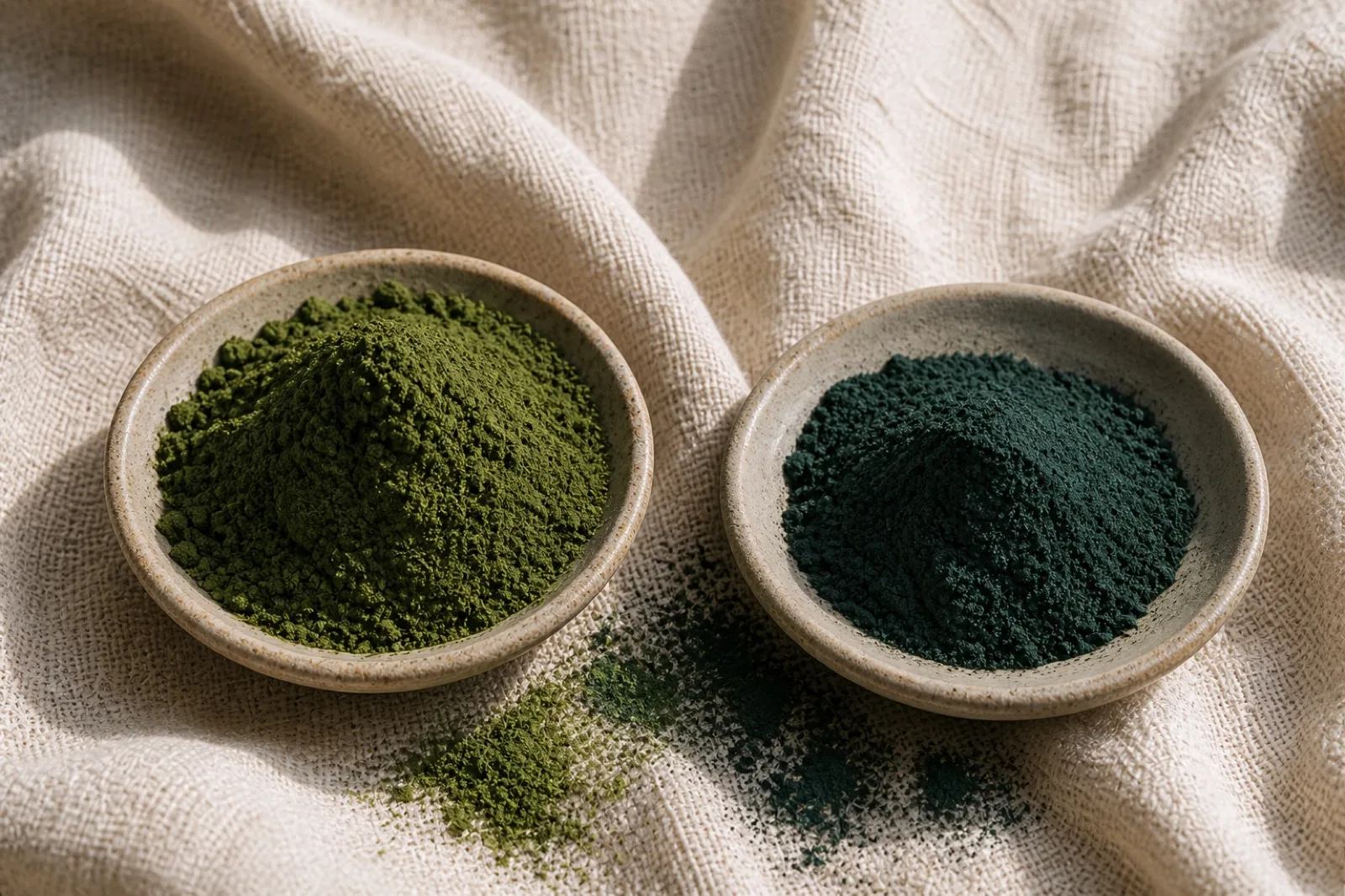
Chlorella is a green microalga with a nucleus and chloroplast. Spirulina is a cyanobacterium without a membrane-bound nucleus, and its cells form filaments. Food and supplement labels group both under algae.
These differences explain why the organisms look different under a microscope. They do not tell you how much of either ingredient is in a tablet.
What are the main differences?
Chlorella gets its colour from green chlorophyll pigments. Spirulina also contains the blue pigment phycocyanin. Both can supply protein and essential amino acids, but nutrient amounts depend on the material tested.
Avoid treating broad comparisons as a ranking. A species name cannot establish a universal absorption percentage, a B12 amount or a “cleansing” role. Check the finished label and the evidence for that product next.
Why are both listed in Vplus?
Vplus lists Chlorella sorokiniana, spirulina and Indigold in its formula. Listing both Chlorella sorokiniana and spirulina tells you the combination. It does not by itself prove that the combination works better than either ingredient alone.
If you are comparing products, check the full ingredient list, the amount per serving and the directions. For a specific nutrient such as protein, B12 or DHA, look for its declared amount rather than calculating it from general algae research.
Further reading: Study of commercial algae composition and safety, Indigo product information.
Read next
Spirulina
The blue-green half of Vplus
Chlorella Growth Factor
What CGF is, and is not