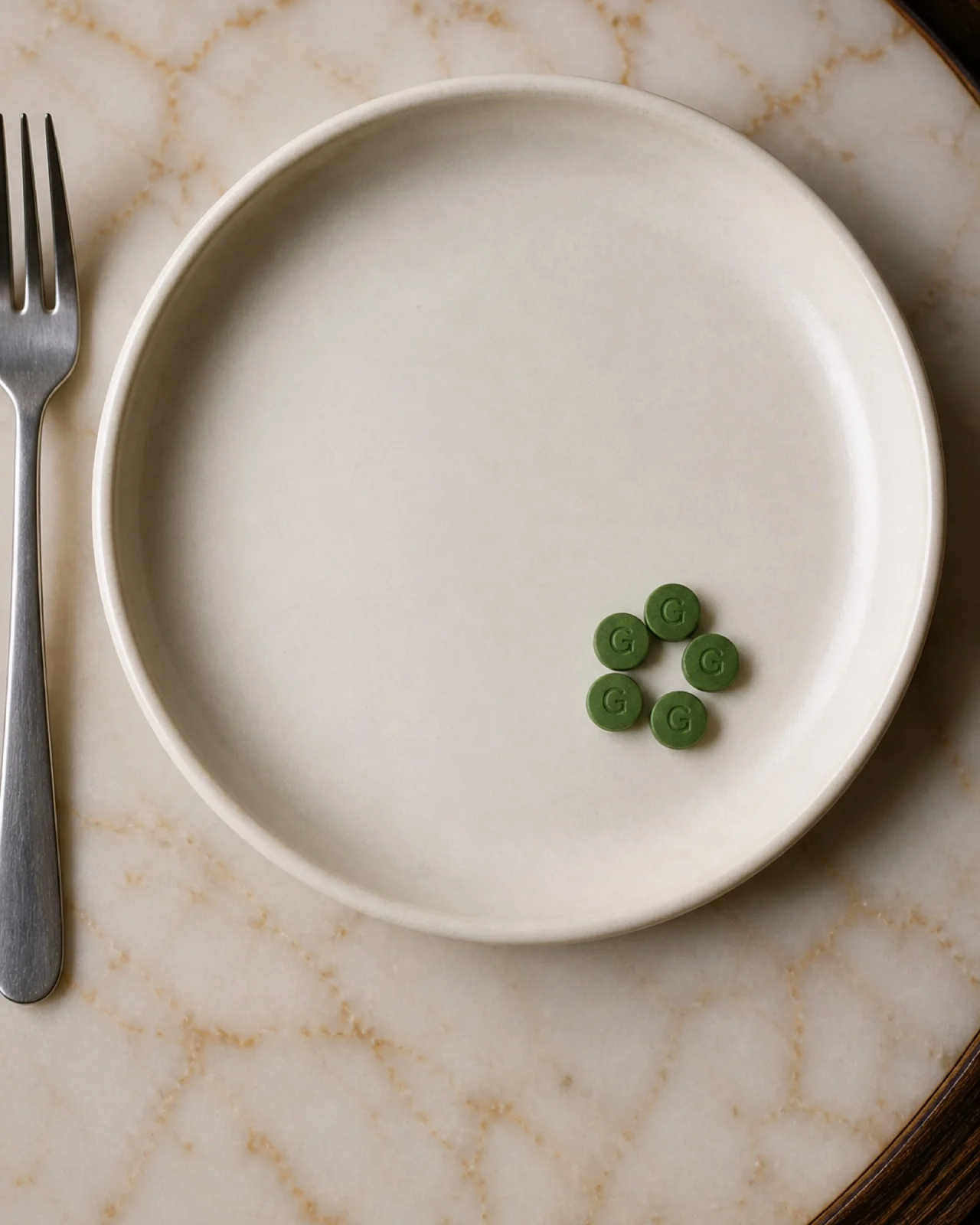
What is spirulina?
Spirulina is the common name for a food ingredient made from microscopic cyanobacteria. Many food and supplement descriptions group it with algae. Its blue-green colour comes from pigments including chlorophyll and phycocyanin.
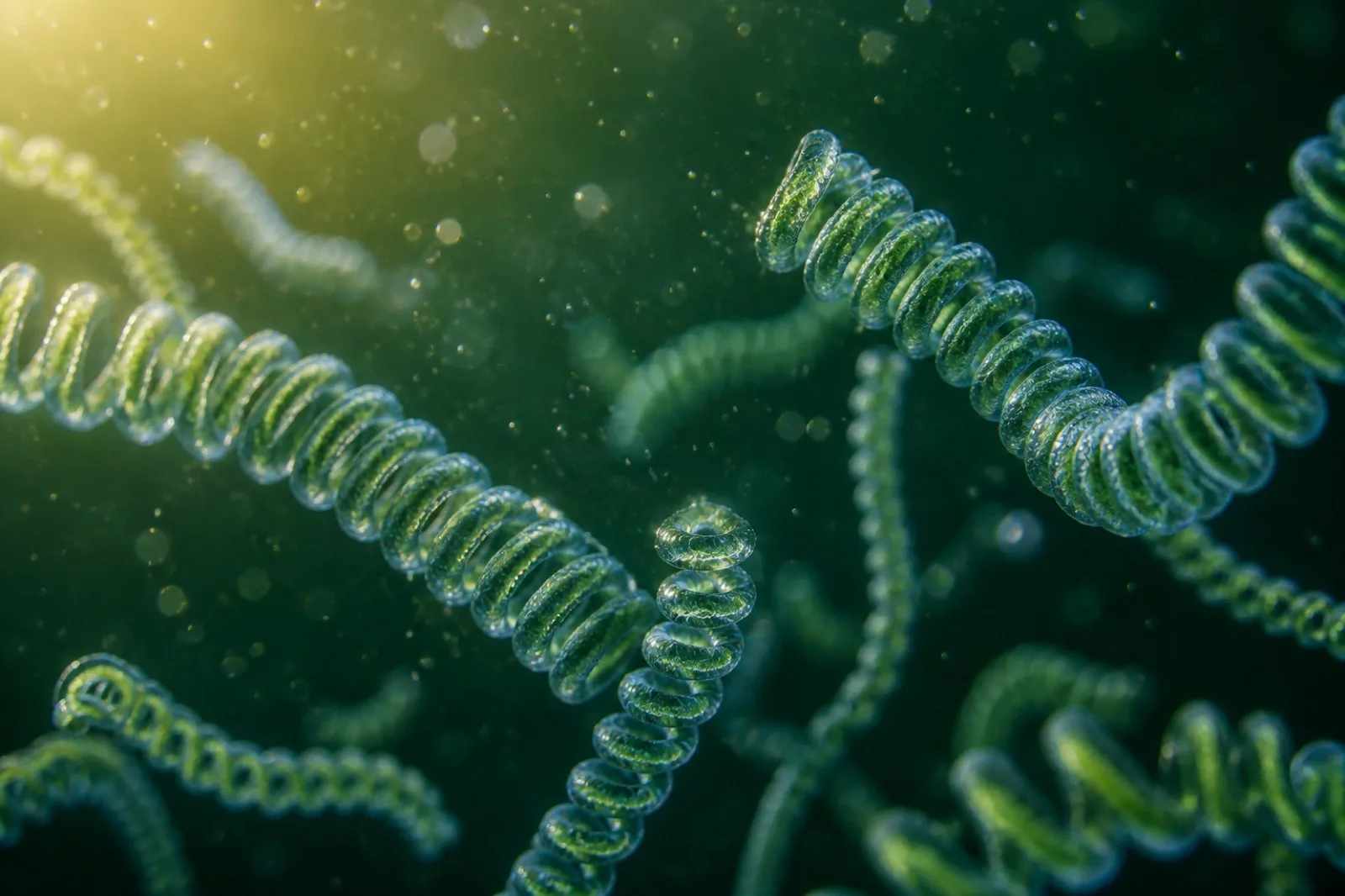
What does spirulina look like?
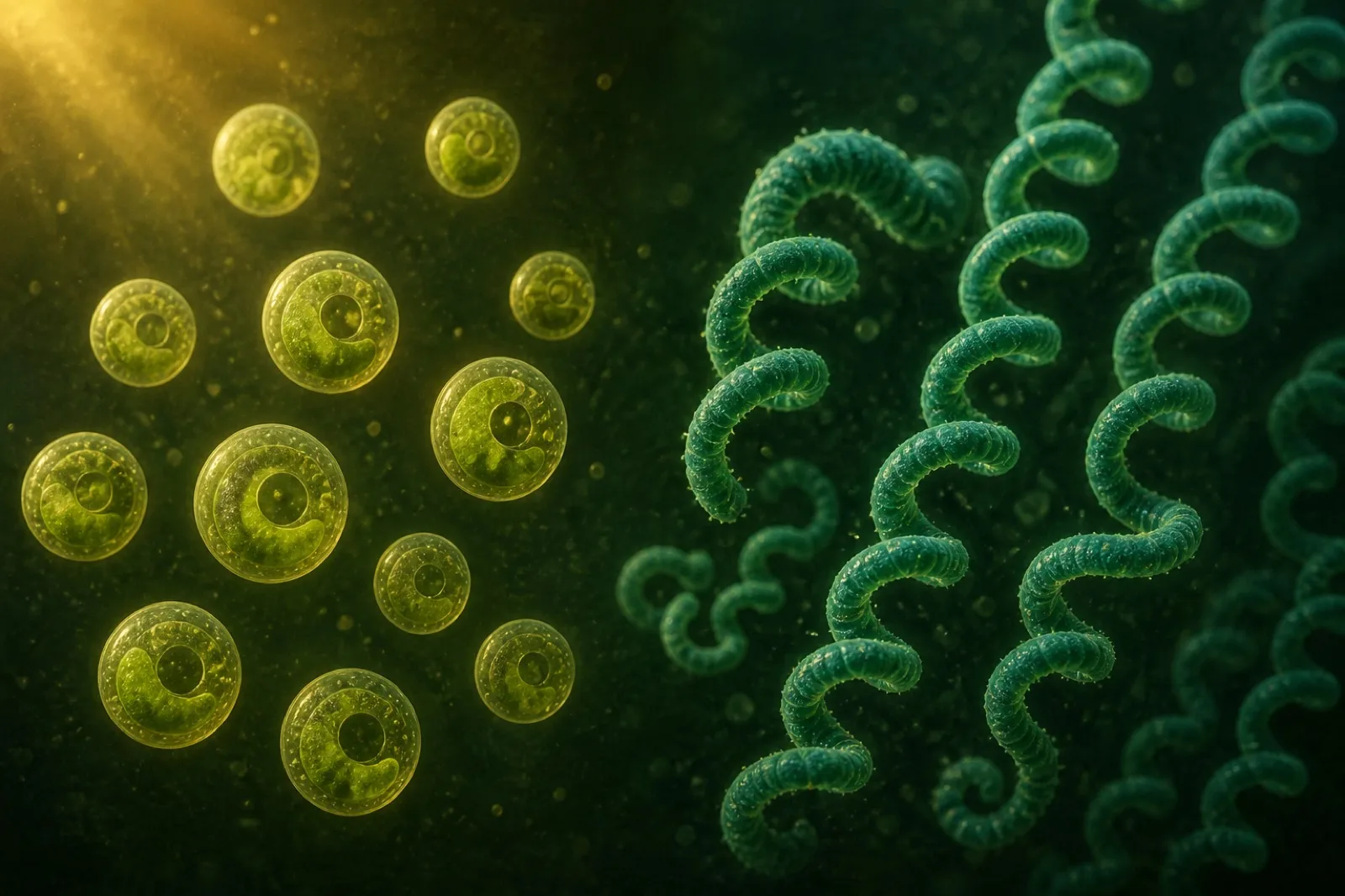
Under a microscope, spirulina forms filaments made of many cells, and most of these filaments coil. Chlorella appears as separate small cells. Spirulina does not have a membrane-bound nucleus, which is one of the basic differences between the two.
The names Spirulina platensis and Arthrospira platensis appear in food descriptions and research. Check the name used on the actual product, as well as its other ingredients and serving size.
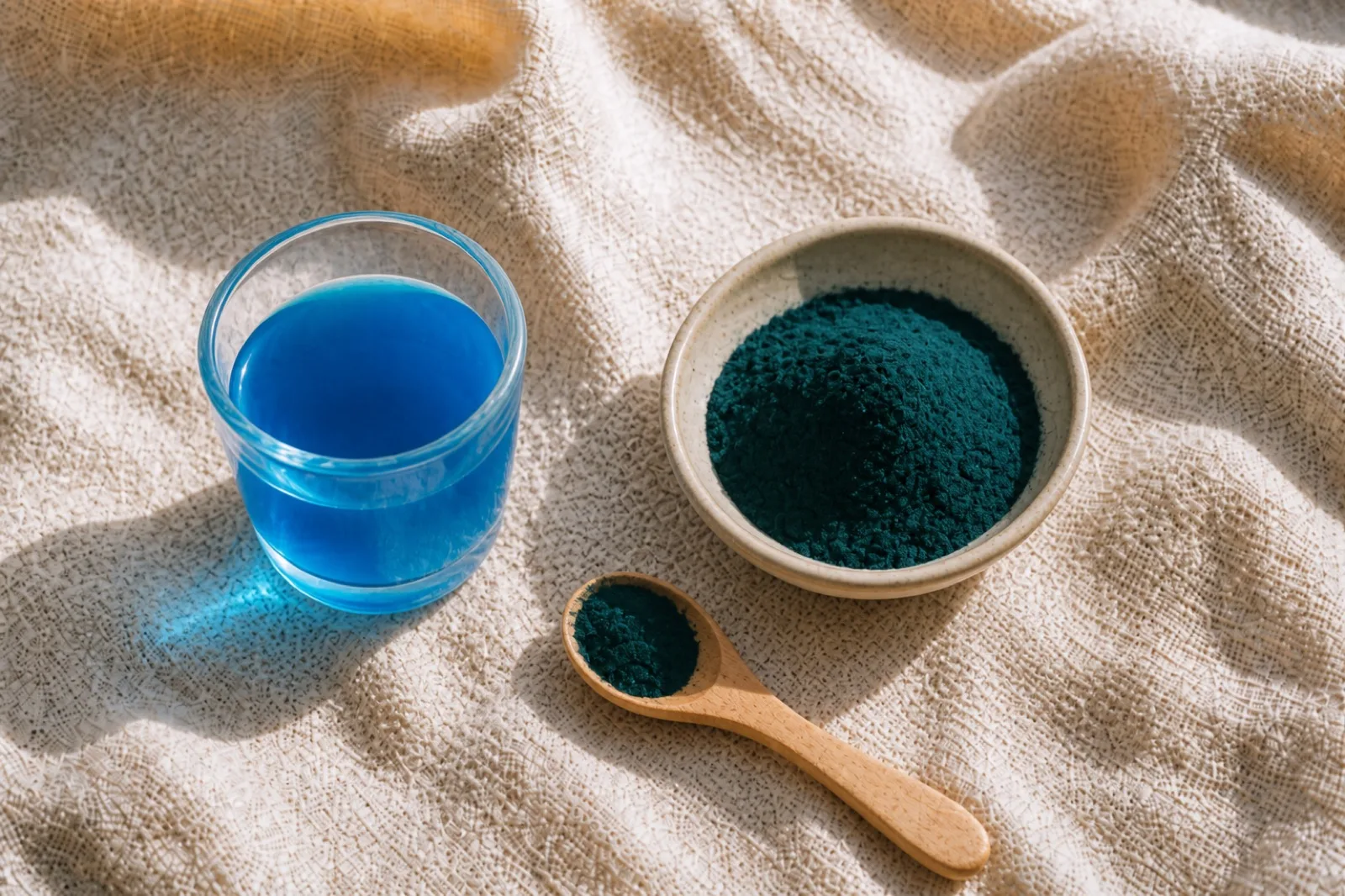
What makes it blue-green?
Spirulina contains chlorophyll, which is green, and phycocyanin, a blue pigment associated with proteins. Together these pigments contribute to its characteristic colour. Manufacturers also extract phycocyanin for use as a food colour.
Pigment research is different from evidence about taking a finished supplement. A finding from a laboratory test on an extract does not establish a benefit from a serving of Vplus.
What nutrients does it contain?
Dried spirulina contains protein, including essential amino acids, as well as other nutrients. The amounts vary between products, so do not read a typical composition table as the Vplus nutrition panel.
For protein, compare grams in the amount you eat. For B12, use a reliable fortified food or supplement rather than assuming that spirulina supplies usable B12. Vplus combines spirulina with Chlorella sorokiniana and Indigold; that combination still needs product-specific nutrient information.
Further reading: Study of commercial algae composition and safety.
Read next
Chlorella Sorokiniana
The micro-alga behind Vplus
Chlorella vs Spirulina
Why Vplus uses both