How do greens powders compare with algae tablets?
A greens powder may include chlorella or spirulina, but that does not make it the same as an algae tablet. Formulas differ in their ingredients and amounts. Read the full serving information before comparing price or convenience.
What might a greens powder contain?
Most greens powders combine several powdered ingredients in one scoop. These may include grasses, leaf powders and fruit. Some formulas also include spirulina, chlorella, probiotics, enzymes or adaptogens.
That breadth is the main distinction. The front may highlight one familiar ingredient, while the panel on the back carries a much longer list. Check how well that list accounts for the serving.
A whole algae tablet starts from a different format. The maker presses dried algae into small tablets. A single-ingredient version has one named ingredient. A narrow algae formula may have several named algae ingredients, but its label remains short enough to inspect line by line.
Powder and tablets can share an ingredient without being the same product. Spirulina or chlorella may be a small part of a broad powder, or the central material in a tablet formula.
Which label amounts should you compare?
Ignore the size of the tub for a moment. Find the serving panel and check four things:
- Serving size. Note the number of scoops, grams or tablets in one stated serving.
- Declared amounts. Look for the amount of each ingredient, as well as the combined blend amount.
- Proprietary blends. The label may show a combined total without the amount of every ingredient inside it.
- Sweeteners and flavouring ingredients. These can be part of the scoop, so include them when comparing labels.
Next, compare like with like. Divide the shelf price by the number of servings for cost per serving. Divide it by the net grams for cost per gram. These figures answer different questions.
Price per gram is most useful when the products declare comparable ingredients. Price per serving tells you what the stated daily use costs. Neither figure says what an undeclared part of a blend contains.
Which format fits your routine?
There is no single score that settles the comparison. Use the factor that matters most for the household routine.
Cost
Compare the price per gram when the ingredients are comparable. Check the serving count, because a large tub and a small scoop can make the front-of-pack size misleading.
Convenience
Tablets come in pieces to count; some products also provide pre-counted sachets. Powder needs a scoop, a glass and stirring, which may be easy at home but less handy on the MRT commute.
Knowing what was taken
A single declared ingredient gives the shortest audit trail. With a blend, clarity depends on whether the label lists every component and amount.
Taste and texture also matter, though arithmetic cannot settle them. Some people prefer a drink beside breakfast. Others prefer small tablets with a glass of water. That is a format preference and says nothing about which product is stronger.
What is in Vplus?
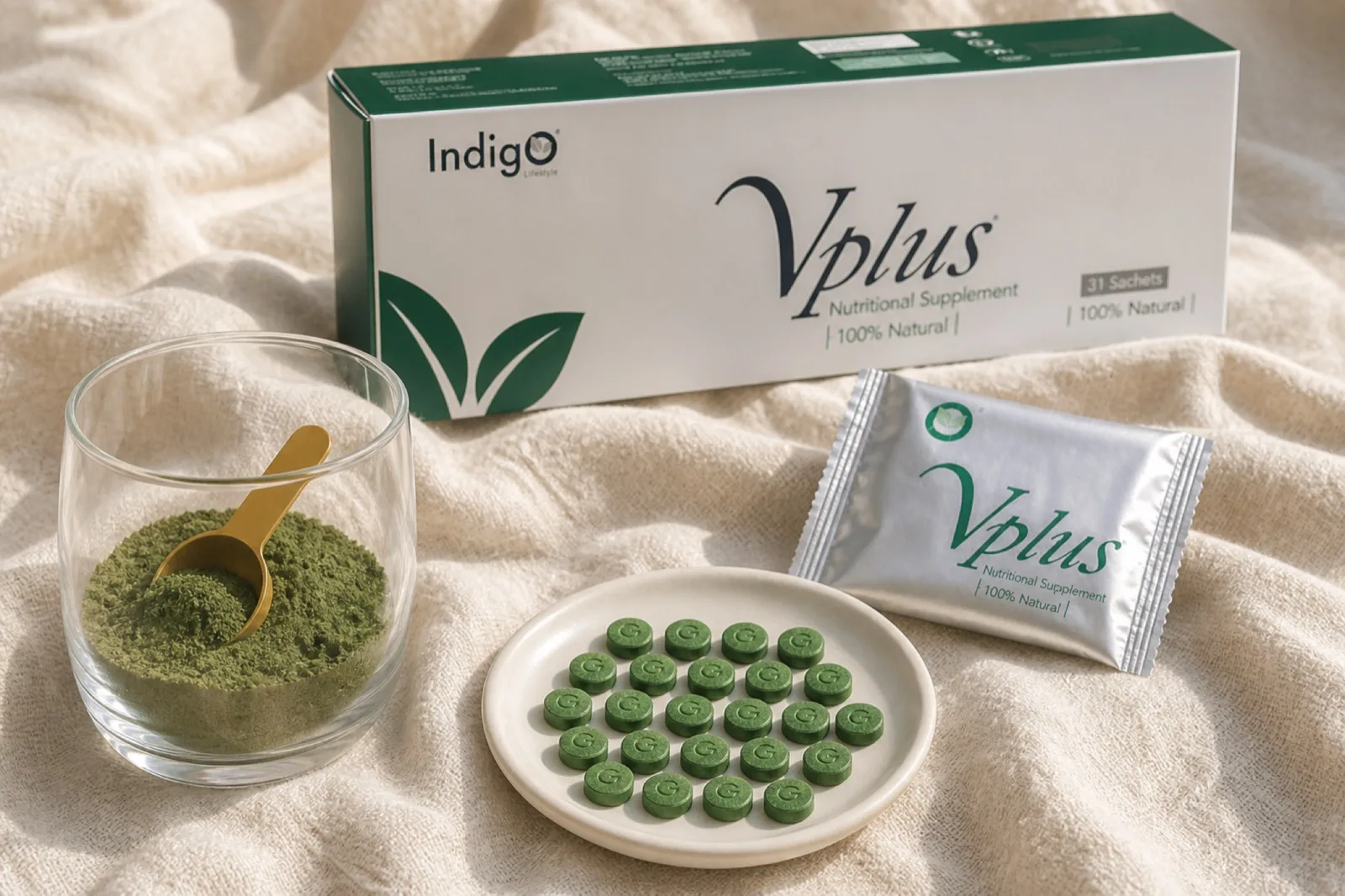
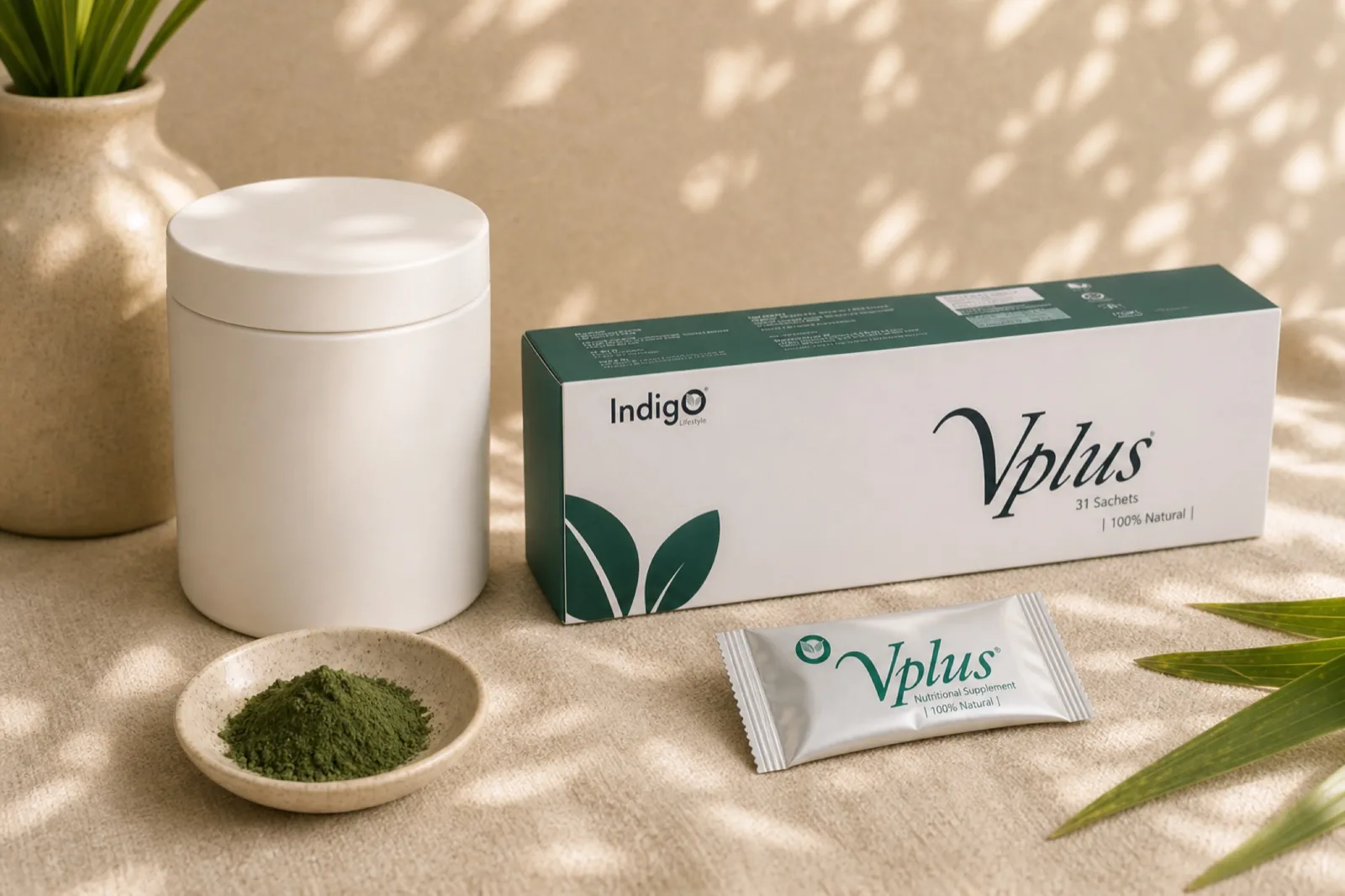
Vplus contains Chlorella sorokiniana, spirulina and Indigold. It is an algae-based formula supplied in small tablets, with a counted twenty-tablet amount in each Formula sachet. The same tablets are also available in the larger Family tub.
Compare the current ingredient information with the powder you are considering. A shared algae ingredient does not establish equal amounts or an identical formula. Choose using the declared details and the format you prefer.
Further reading: Indigo product information.
Read next
How to read a supplement label
Five things, sixty seconds
How chlorella is grown
Ponds, tanks and purity