How to read the vitamin C amount on a label
A large vitamin C number needs a serving size beside it. Check whether the amount covers one tablet or several, then read the reference percentage and ingredient form. More vitamin C in a serving does not by itself make it a better choice.
What does the percentage mean?
NRV stands for Nutrient Reference Value. It is a standard adult reference that makes nutrition labels easier to compare. It is not a personal instruction, a minimum target or an upper limit.
The percentage compares the amount in one stated serving with that reference figure. A serving of 1,000 mg can put the result far above 100%. A high percentage does not mean the product is the right choice for you.
Read these four lines together:
- Serving size: the number of tablets, capsules or spoonfuls counted.
- Amount per serving: the milligrams supplied by that stated serving.
- NRV percentage: the amount expressed against the printed reference value.
- Servings per pack: how many stated servings the container holds.
A front-label “1,000 mg” may describe one tablet, two tablets or a full daily serving. The small panel settles that point.
Which vitamin C form is listed?
“Vitamin C” is the familiar name. The ingredient list tells you which form the product contains. That matters when comparing two bottles with the same large number on the front.
- Ascorbic acid is the standard ingredient name for vitamin C.
- Sodium ascorbate and calcium ascorbate are ascorbate forms paired with a mineral.
- Ascorbate is the family name that may appear beside that mineral.
- Buffered describes the formulation. It does not add a universal amount or quality grade.
Some labels make “buffered” stand out, but the ingredient list carries the useful detail. Check which ascorbate is present, how much vitamin C the serving provides and whether the mineral has its own declared amount.
Two products can therefore use different ingredient names while declaring the same vitamin C amount. The wording alone does not make one the stronger label.
Does water-soluble mean unlimited?
Vitamin C is water-soluble, but high supplemental amounts can still cause problems such as diarrhoea or stomach discomfort. Do not interpret the term as permission to take unlimited amounts.
That fact does not turn 1,000 mg into a recommendation. The milligrams still describe the quantity in the stated serving, and the NRV percentage still describes its relationship to a standard reference. Neither number accounts for your meals, other supplements or medical advice.
How does vitamin C in food compare?
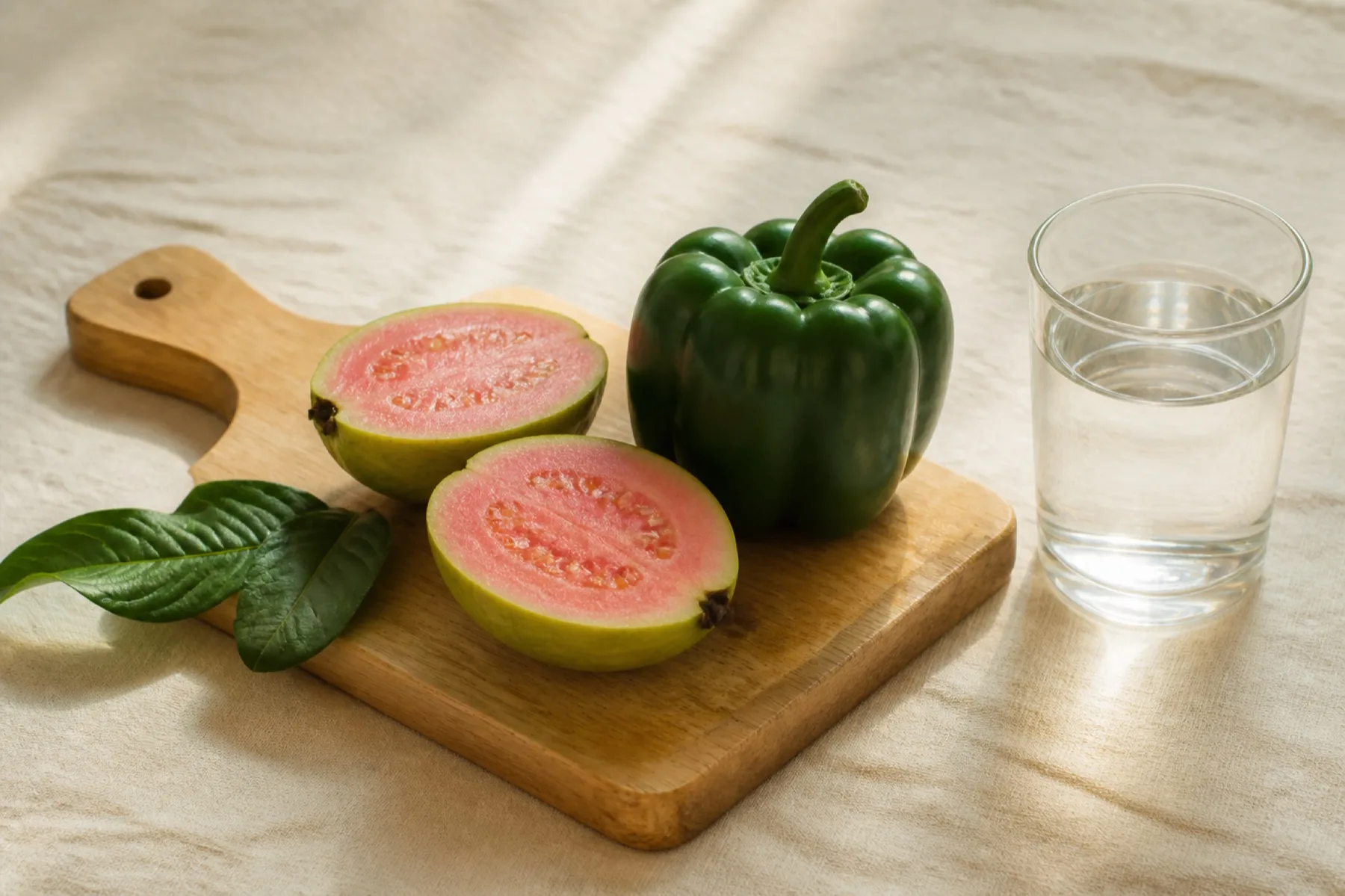
Fruit and vegetables provide vitamin C as part of ordinary meals. Their water, fibre and other food components make them different from an isolated vitamin supplement.
Guava, oranges and capsicum are familiar vitamin C foods. The amount depends on the food, variety, storage, preparation and portion.
Food tables often give values per 100 g, while a supplement label may give them per tablet. Compare the amounts served if you need to put the two on the same basis.
Product details: Vplus Formula: ingredients, pack details and directions.
Further reading: NIH guide to vitamin C.
Read next
School-term bugs and the household routine
Soap, separate bottles, and a morning simple enough to repeat
Haze season, and the week indoors
NEA publishes the number. Use it, then keep the household week simple