How much protein can algae provide?
Chlorella and spirulina contain protein and essential amino acids. Their nutrient content varies with the organism and how it is grown and processed. A small serving of algae tablets is different from a meal or a serving of protein powder.
What does “complete protein” mean?
The body needs nine essential amino acids from food. People use “complete protein” for a protein that supplies them in suitable proportions. Quality also depends on digestibility, and the amount you eat still matters.
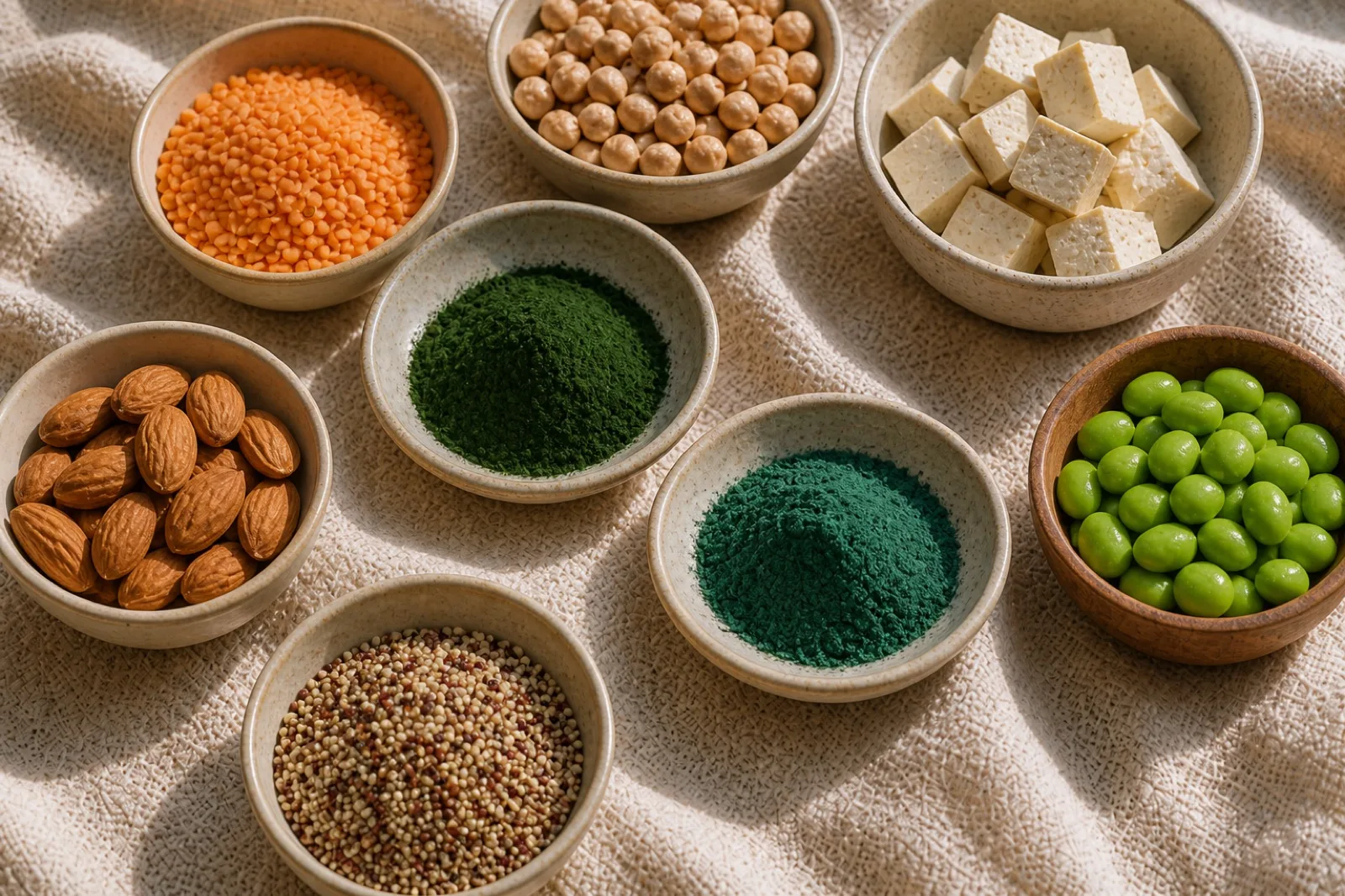
Chlorella and spirulina contain essential amino acids. In a varied plant-based diet, you can also get them from foods such as soy, beans, lentils, grains, nuts and seeds. You do not need to hunt for a single perfect protein in each meal.
How should you compare protein foods?
Compare protein in the portion you eat. Dry algae powder, cooked lentils and a glass of soy milk contain different amounts of water, so a dry-weight percentage alone can give a misleading impression of a meal.
Read grams of protein per serving on packaged products. For fresh or cooked foods, use a food-composition value that matches the preparation and portion. Researchers who compared products found that one algae percentage cannot describe every powder or tablet.
How much protein is in Vplus?
One Vplus sachet contains twenty tablets weighing 200 mg each: 4 g of tablets altogether. That total is not a protein amount. The formula contains more than one ingredient, so we do not calculate a protein figure by applying a typical chlorella or spirulina percentage.
If you are planning protein intake, use the finished product’s declared nutrition values and keep substantial protein foods in your meals. Vplus is not a replacement for them or for a protein supplement recommended for a particular need.
Further reading: Study of commercial algae composition and safety.
Read next
Chlorophyll
The green powerhouse
Chlorella Sorokiniana
The micro-alga behind Vplus