
Natural and synthetic vitamins: what is the difference?
A vitamin can come from food or be added to a supplement as a separate ingredient. “Natural” and “synthetic” describe aspects of its source or production, but neither word tells you whether a product suits your needs. The specific vitamin and amount matter.

What do the terms mean?
A vitamin may occur within a food. A supplement maker may extract it from a source, or manufacture it and add it as an individual ingredient. A whole food and an isolated vitamin are different products, even when both supply the same named nutrient.
“Natural” on the front of a supplement does not show the amount, all processing steps or the quality of the finished product. Read the ingredient list and nutrient panel together.
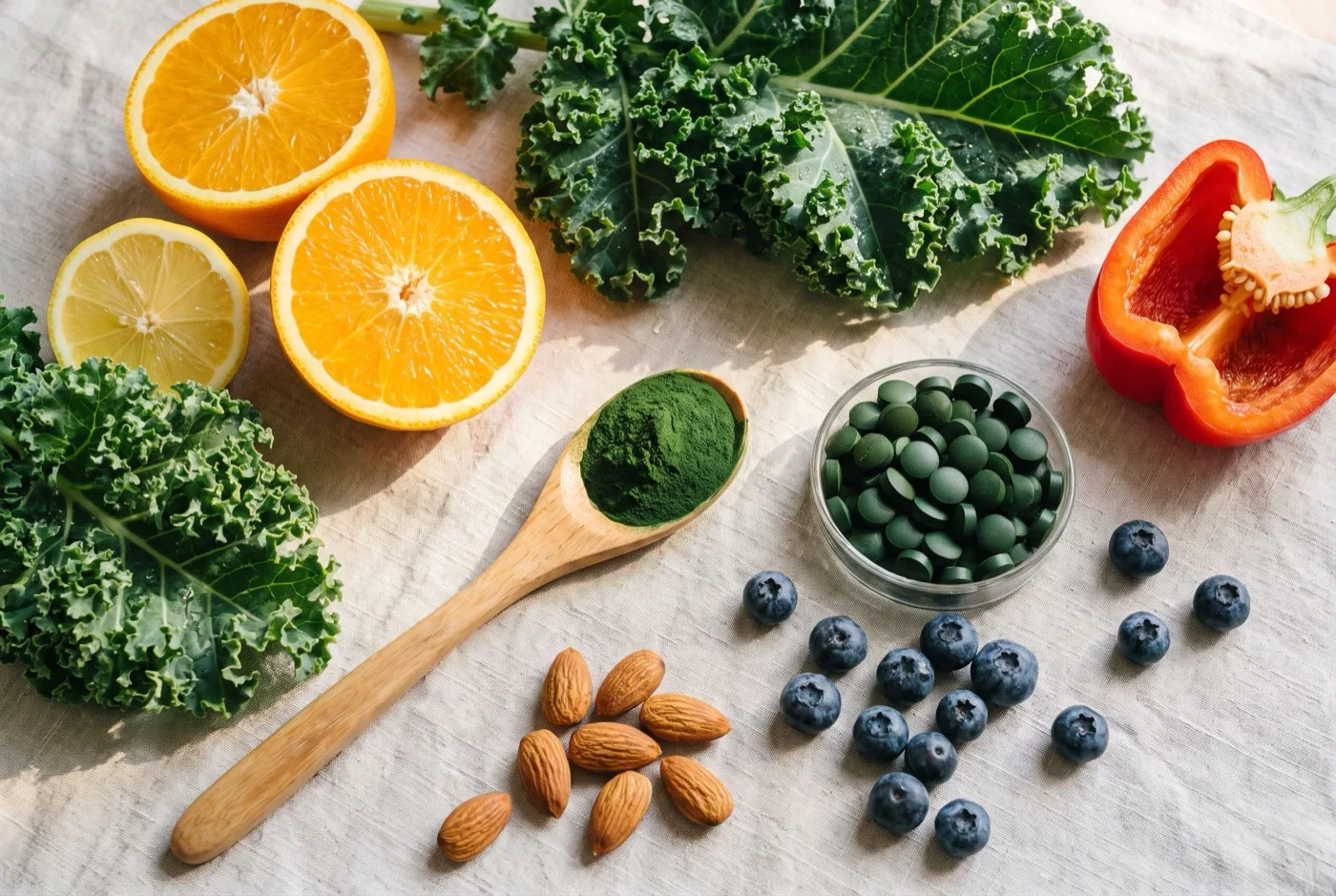

What does whole food provide?
An orange supplies vitamin C alongside water, fibre and other food components. That is a reason to include a variety of foods in your diet. It does not prove that your body always absorbs vitamin C from an orange better than vitamin C in a supplement.
Dried algae contain a mixture of compounds, but a small tablet serving does not replace the portions or variety of a meal. Whole-food wording describes the ingredient. It does not describe complete nutrition for a person.
How do you compare supplement forms?
Compare the particular vitamin rather than applying one rule to all of them. NIH guidance reports comparable bioavailability for ordinary supplemental ascorbic acid and vitamin C in foods. Other vitamins can have form-specific differences.
The amount matters whichever source you use. Concentrated supplements can provide more than you need, and “water-soluble” or “natural” does not mean unlimited use. Check other products you take and count repeated ingredients together.
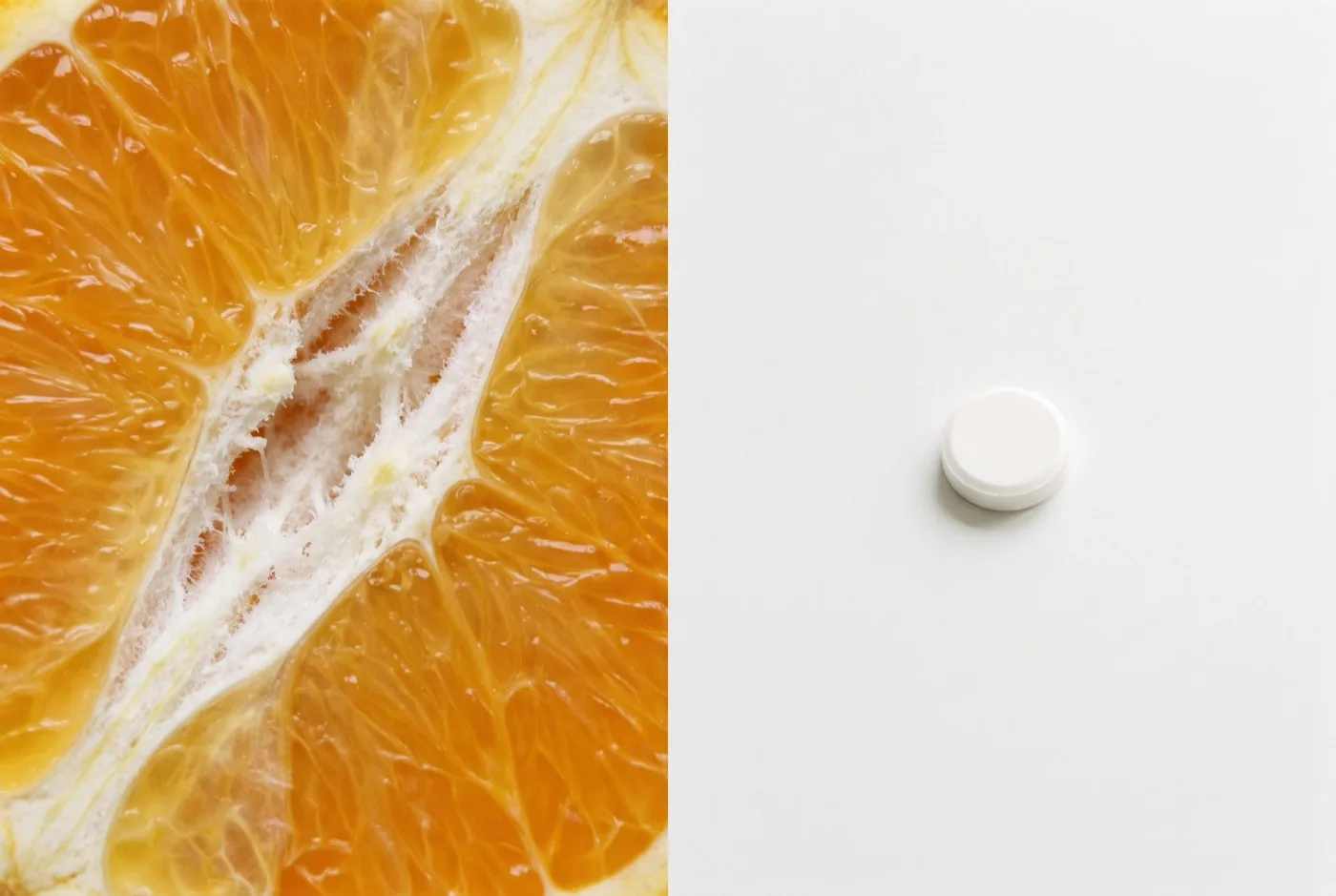

Further reading: NIH guide to vitamin C.
What should guide your choice?
Choose according to the nutrient you need, the amount supplied and the advice relevant to your circumstances. Fortified foods or a specific supplement may be useful for a defined need; ordinary foods remain important for everyday eating.
Vplus combines algae ingredients in small tablets. Compare its current ingredient list and serving information on the same basis as any other product, without assuming that source alone predicts a health result.